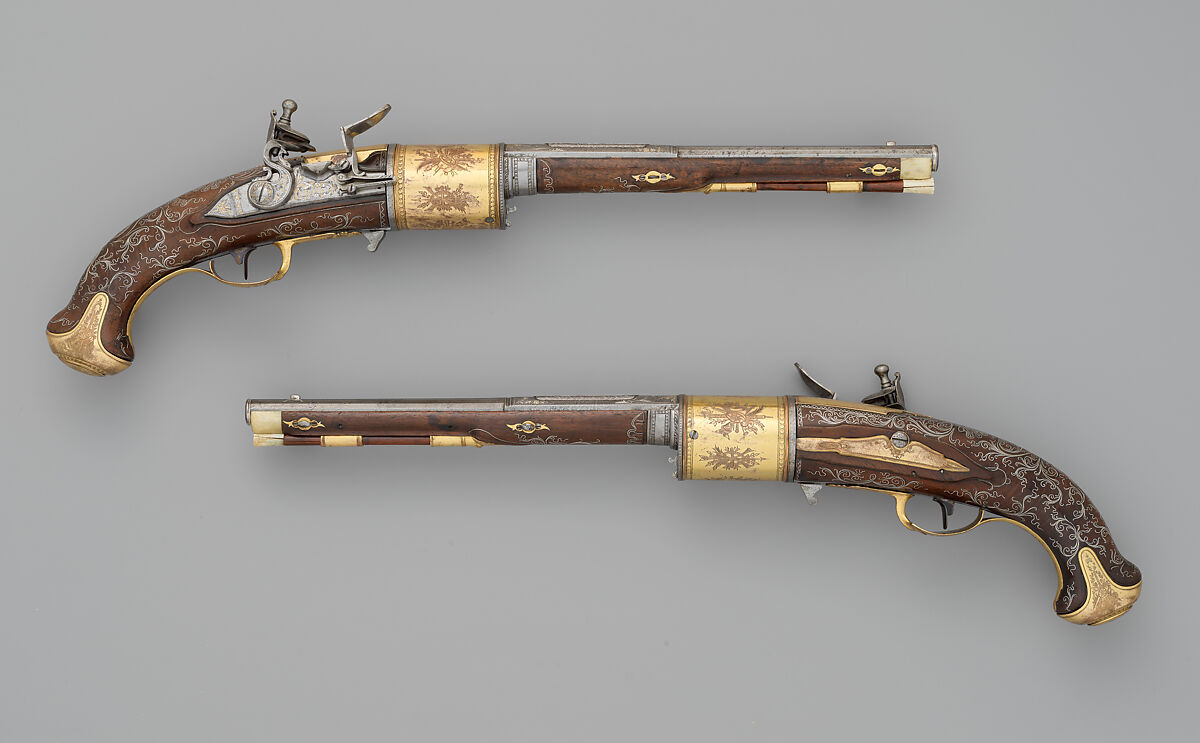
A pair of Russian flintlock revolvers dating to about 1790 has joined the Metropolitan Museum of Art’s collection through a 2026 gift from Irene Roosevelt Aitken.
Made at the Tula Arms Factory, the pistols offer a look at repeating firearms and luxury gunmaking decades before Colt’s revolvers. According to the museum’s collection record, they belonged to a matching set made for a member of the Russian imperial family during Catherine the Great’s reign between 1762 and 1796. A corresponding six-shot fowling piece survives at the State Hermitage Museum in St. Petersburg, Russia.
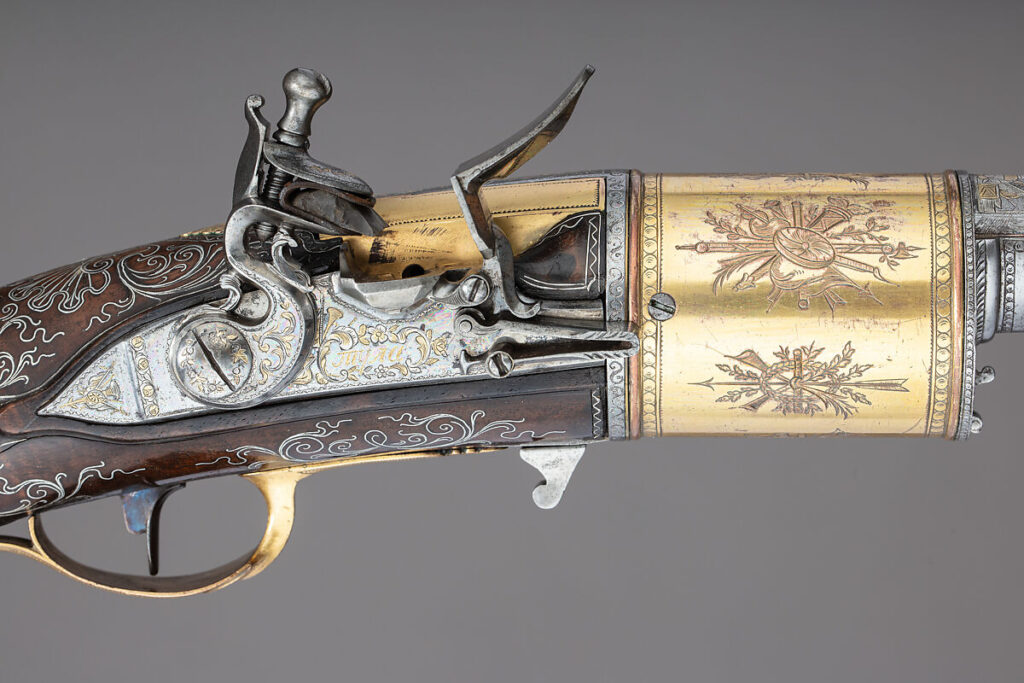
The pair combines gilt copper-alloy cylinders and mounts with walnut stocks decorated in silver wire. Particularly interesting to collectors are the smoothbore barrels: the museum identifies their Damascus-like appearance as etched decoration imitating pattern-welded steel as opposed to being actual pattern-welded steel. That distinction illustrates why a surface pattern warrants closer examination when identifying a firearm’s construction.
The acquisition expands an existing group of Tula arms at the Met. Its holdings also include pistols made for Grand Duke Constantine around 1801, part of a series made for Emperor Alexander I and his brothers to mark Alexander’s coronation. Each of the four brothers received five hunting arms, including a pair of pistols. The museum currently lists Constantine’s pair on view in Gallery 375 at its Fifth Avenue building.
Together, the two pairs offer collectors an opportunity to compare the factory’s approach to ornament and imperial patronage across roughly a decade.
The circa-1790 revolvers, accession numbers 2026.267.9a and b, are currently listed as not currently on view, but that could change with future exhibitions. In the meantime, their online record includes public-domain photographs for closer study.
Collectors interested in studying early ignition systems can also explore Jim Gooding’s reconstructed gun lock catalog, which brings together photographs, markings and descriptions of historic mechanisms.
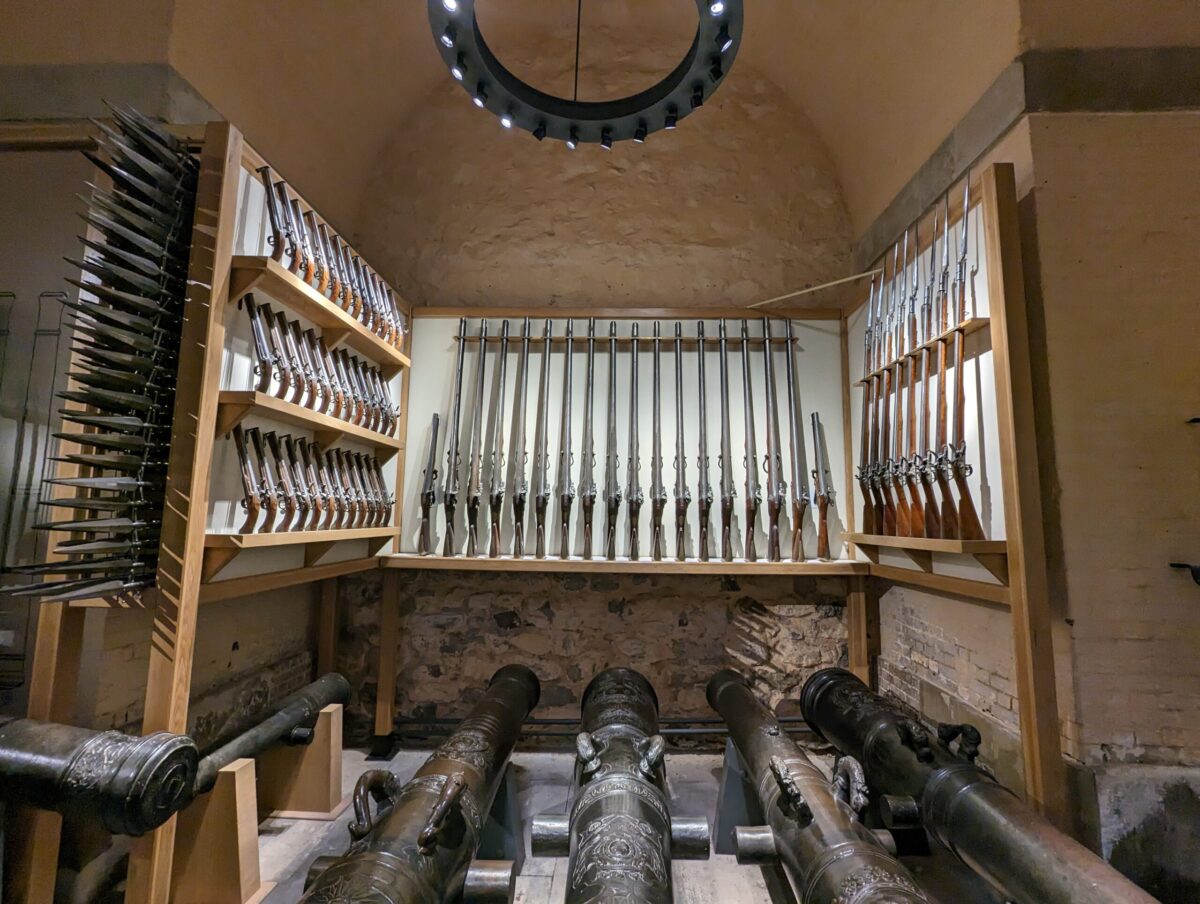
The Royal Armouries is planning a Leeds waterfront development with an estimated budget exceeding £100 million. For firearms collectors, the museum’s wider ambitions raise a practical question: how could redevelopment improve access to historic arms and their records?
Director general Nat Edwards outlined the waterfront proposal in a September 28, 2026, interview with Place Yorkshire. Its centerpiece would be a 38,000-square-foot exhibition and events hall on the existing Tiltyard site.
Edwards targeted a planning submission during the second half of 2027, followed by construction beginning in mid-2028. His estimated timetable would bring completion and fit-out by early 2031. He said the existing museum would remain open throughout the waterfront construction. These dates represent targets for the proposed development.
The broader Armouries 700 masterplan contains proposals with more direct relevance to collectors. These include phased gallery refurbishment, redisplaying the collection, improving conservation facilities, and expanding the library and archive.
Royal Armouries artist’s rendering
Those improvements could give visitors fresh opportunities to examine how curators present historic firearms and explain their development. Better conservation facilities would also support the preservation of the objects themselves. One element of the wider program has already opened: the Special Exhibitions Gallery welcomed visitors in June 2025.
The research collections provide a particularly strong reason for firearms enthusiasts to follow the project. The archives contain nearly 500,000 documents, files, bound volumes, photographs, films, and videos. Holdings include material relating to the Royal Small Arms Factory at Enfield and the Ministry of Defence Pattern Room. They also preserve company records and personal papers from arms researchers and collectors.
For collectors studying British military firearms, these resources can help place individual models and design changes in historical context. However, only a small portion of the archive holdings currently appears in the searchable online catalog.
The published masterplan leaves several collector questions unanswered. It does not identify which firearms will feature in redesigned displays or specify expanded research hours. It also does not promise comprehensive archive digitization. The eventual benefits will depend on how the museum delivers those details.
Collectors planning research visits can already request library and archive appointments, currently offered Tuesday through Friday. Both services require advance booking. Library staff specifically advise visitors to wait for booking confirmation before making travel arrangements.
A few years ago, I interviewed Jonathan Ferguson, the Keeper of Firearms and Artillery for the Royal Armouries. You can check it out here:
Jamestown Rediscovery is building reference collections that help researchers identify the surviving fragments of early firearms and their accessories.
A September 22, 2026, update highlights curator Janene Johnston’s research into material from seventeenth-century James Fort. Her recent presentations covered matchlocks, musket rests, and musketeer accessories. She shared that work at the Arsenals of History symposium in Cody, Wyoming, and the Fields of Conflict conference in Glasgow. [Ed. note:Arsenals of History is an exceptional symposium; I have presented there multiple times.]
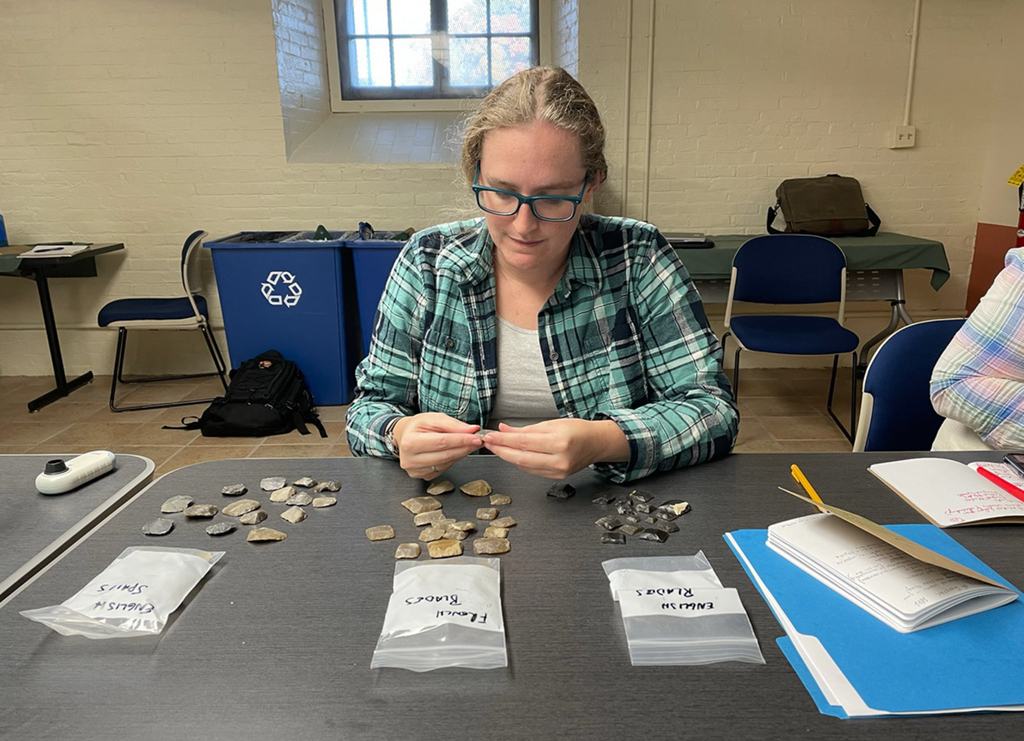
Assistant Curator Janene Johnston inspects different types of gunflints at the 2022 Archeology of Firearms conference.
Reference collections bring representative and unusual examples together for comparison. Jamestown organizes these physical study collections for staff and outside researchers. They provide a way to compare incomplete objects with examples that retain more recognizable features.
The project’s July update offers a glimpse of that selection process. Johnston chose bullet-mold examples based on caliber, completeness, and head shape. Conservators also treated bandolier chargers she selected for their reference collection.
Musket rests offer another useful example. Jamestown holds approximately 50 components of these supports for heavy muskets. Surviving pieces include U-shaped iron yokes with curled ends, sockets, and fittings from the bases of wooden staffs. Some sockets even preserve mineralized traces of the vanished wood.
These distinctive features provide evidence for identification when much of an object has disappeared. Period illustrations offer another comparison. Jamestown’s published description points to musket rests depicted in Jacob de Gheyn II’s early-seventeenth-century military manual.
Earlier Jamestown research also demonstrates why old identifications deserve review. A 1902 excavation report described one object as a small lead or pewter candlestick or sconce. In a 2018 update, researchers identified that same object as a bandolier cap dating to approximately 1615. The cap belonged to a container for a measured powder charge.
Excavation records provide another essential check. The September update explains how plowing and twentieth-century utility work mixed material from different periods. An artifact found near an early feature may have moved from elsewhere. Proximity alone cannot establish its original association.
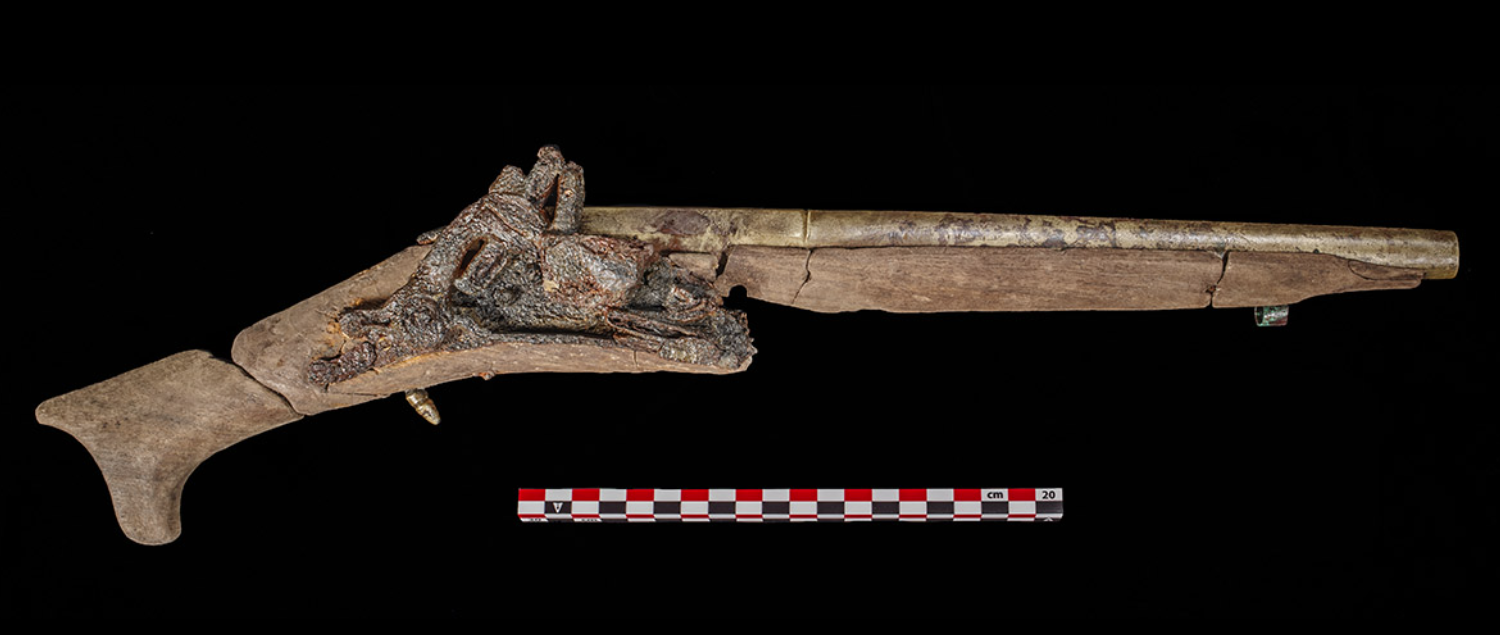
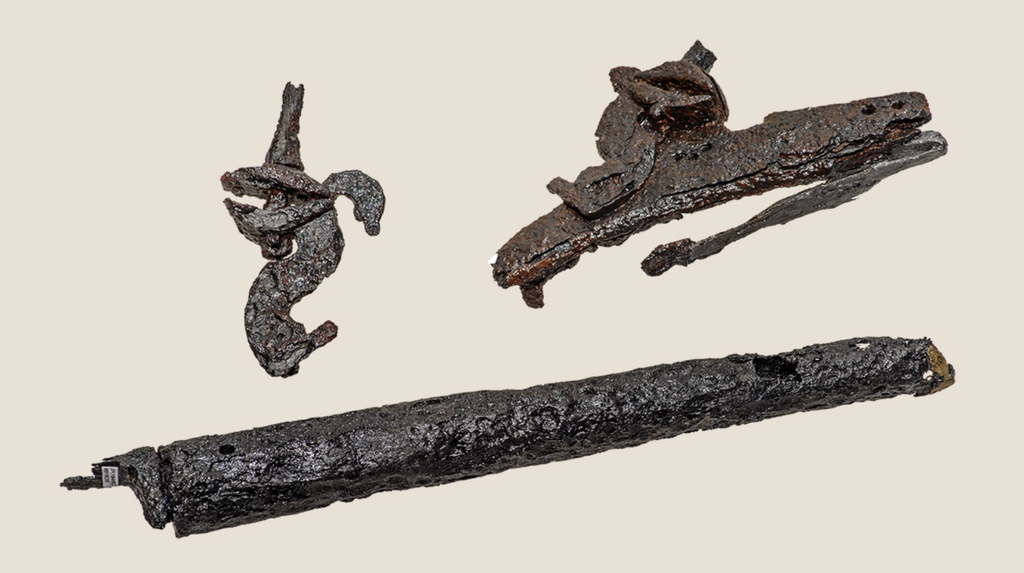
Snaphaunce cock, lock, and barrel
For collectors studying early arms and excavated material, these examples suggest a practical standard for evaluating an attribution. Look for distinctive physical features, documented recovery information, and convincing comparisons. Record uncertainty when the evidence leaves several possibilities open.
Johnston’s reference collections give researchers a stronger foundation for making those comparisons – and revisiting conclusions as new evidence emerges.
[Ed. note: A few years ago, I interviewed Janene Johnston, as well as Director of Collections and Conservation Michael Lavin, and Conservator Dr. Chris Wilkins. You can check it out below.]
Helios House Press and the Cody Firearms Museum have launched a Kickstarter campaign for a new book exploring Winchester’s manufacturing history.
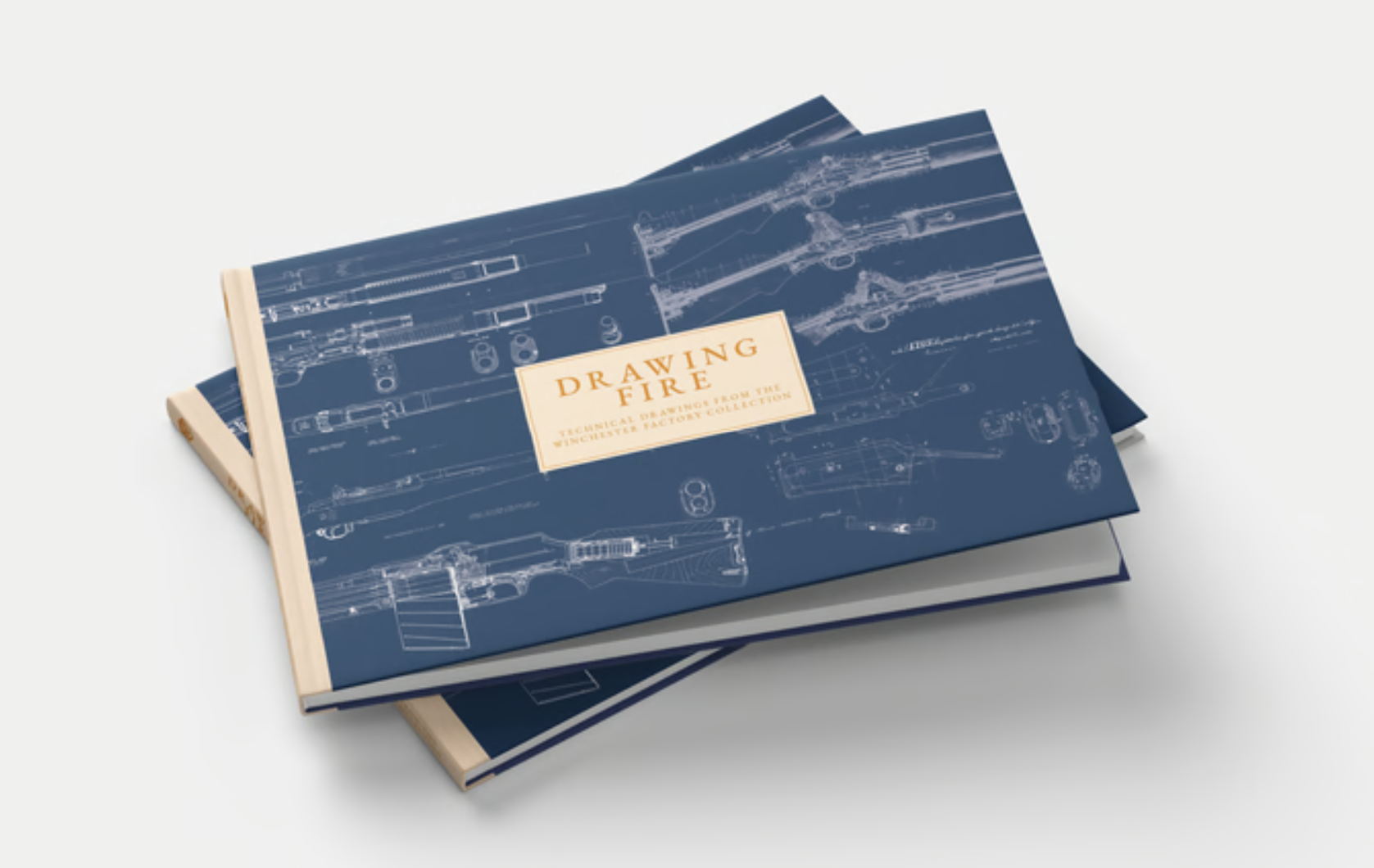
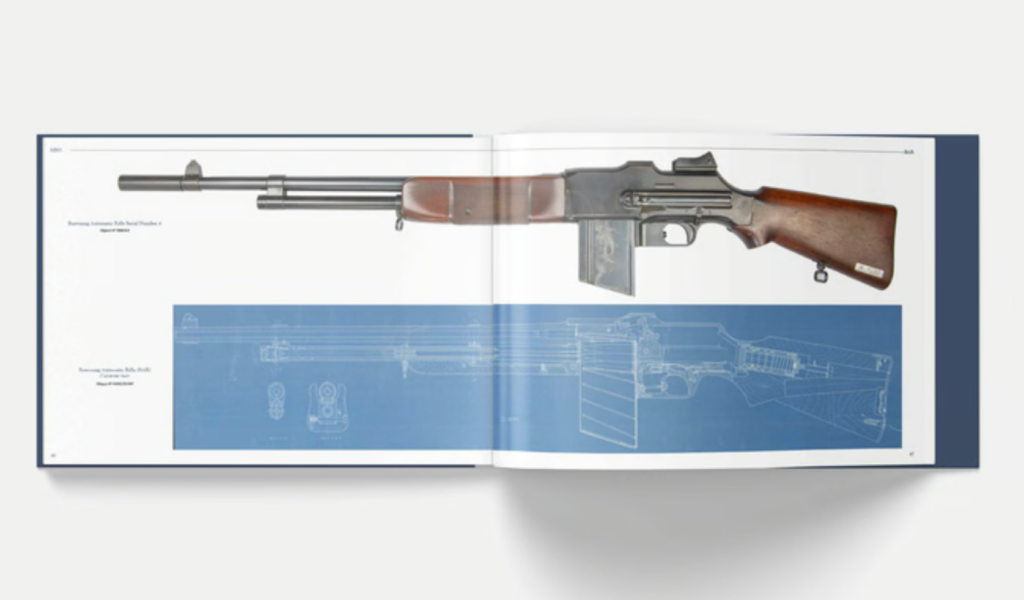
Titled Drawing Fire: Drawings from the Winchester Collection, the book will showcase original engineering drawings from the museum’s extensive archives. The publication will give collectors and researchers access to historic documents rarely seen by the public.
The Cody Firearms Museum and McCracken Research Library preserve approximately 30,000 drawings from Winchester’s engineering archives. These documents span the 1880s through the 1940s and reveal how the company designed and manufactured its firearms.
The collection includes everything from individual screws and mechanical components to complete firearms, manufacturing equipment, and factory buildings. Some firearms have extensive surviving documentation that traces their development from initial concepts to finished products.
Among the featured firearms are the Winchester Model 1895 and M1 Garand. The book will also explore lesser-known firearms, experimental designs, prototypes, and the machinery used in Winchester’s manufacturing operations.
The drawings offer an unusual perspective on Winchester’s history. While collectors typically focus on finished firearms, these records reveal the engineering decisions and manufacturing processes behind them.
Many drawings survive on oversized drafting sheets. Their dimensions allowed engineers to illustrate intricate components while maintaining the proportions and details necessary for manufacturing.
However, those same dimensions present challenges for preservation, exhibition, and publication. Their size and fragility make displaying the original documents difficult.
Drawing Fire aims to overcome those limitations through a large-format hardcover book with landscape-oriented pages. The publisher plans to use Smyth-sewn binding to accommodate the oversized illustrations.
The publication will combine archival drawings with original photography and explanatory text from Cody Firearms Museum and Helios House staff.
The project builds on an existing relationship between the museum and publisher. Previous collaborations include Ink & Iron: Winchester Printing Blocks in the Cody Firearms Museum Collection and Primary & Secondary: Unravelling Firearms Mysteries Through Documentary Evidence.
For Winchester collectors, the book promises more than attractive illustrations. Factory drawings can provide valuable evidence about design changes, experimental features, and manufacturing practices that finished firearms cannot always reveal.
The Kickstarter campaign launched September 21, 2026, and continues to seek financial support for production. Interested collectors can review the project’s sample pages, available rewards, and funding progress through the campaign.
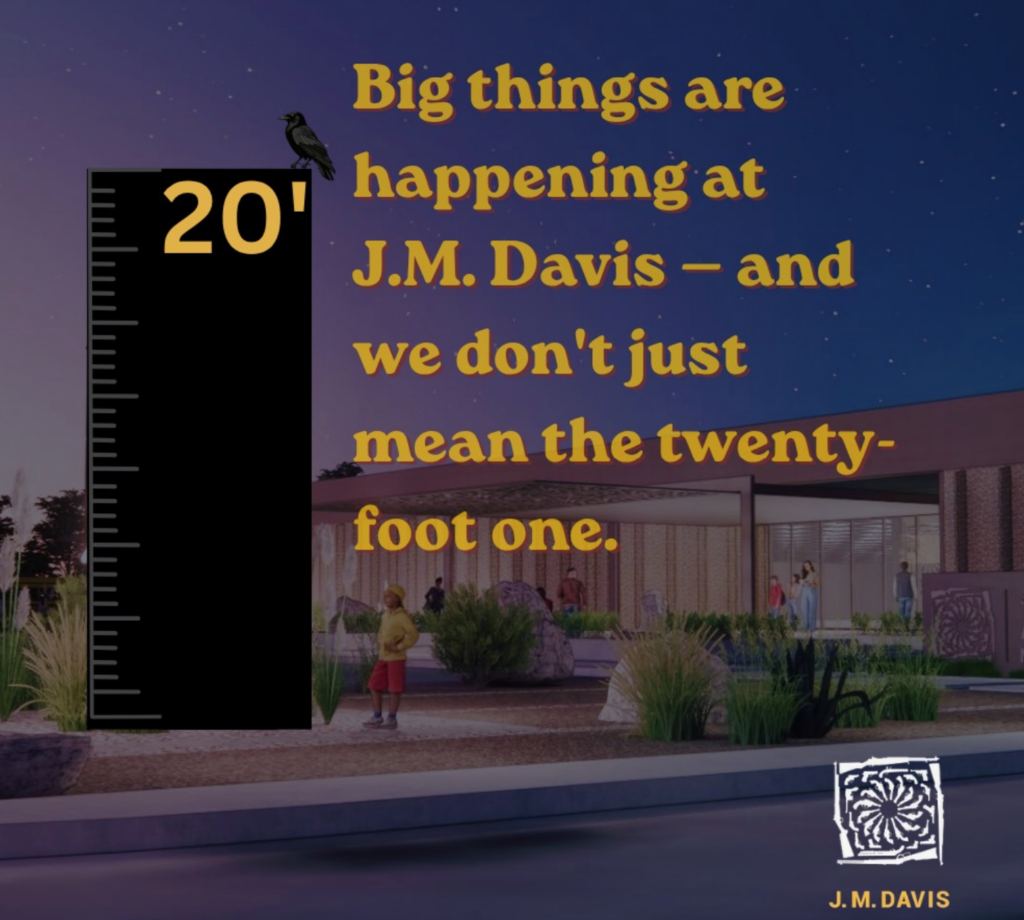
The J.M. Davis Arms & Historical Museum in Claremore, Oklahoma, is preparing to unveil a major new addition on October 30, 2026, as part of an ongoing effort to transform the visitor experience at one of America’s most significant firearms museums.
The museum recently announced the upcoming reveal on Instagram, inviting visitors to see extensive changes to its galleries and exhibits. The announcement promises new artwork, historical displays, and stories exploring the American West and the people who shaped it.
The museum has dubbed the upcoming event the “Big Red Gun Unveiling,” although it has not yet publicly disclosed exactly what visitors can expect to see.
The museum’s teaser from Instagram
Home to the largest privately held firearms collection in the world, the museum houses more than 12,000 firearms and thousands of additional historical artifacts assembled by John Monroe Davis.
The dedicated museum opened in 1969, preserving Davis’s collection for public education and historical interpretation.
Despite its reputation as a firearms museum, the institution’s holdings extend far beyond guns. The collection includes Old West saddles and spurs, John Rogers statuary, Toby mugs, beer steins, World War I posters, and artifacts documenting the history of Claremore and Rogers County.
Through multimedia exhibits, the museum presents these objects as part of a family-friendly journey through American history.
The upcoming improvements promise to build upon that approach, introducing new artwork, historical displays, and expanded interpretation of the people and events associated with the American West.
The Friends of the J.M. Davis Museum is hosting the October 30 unveiling at the museum, located at 330 North J.M. Davis Boulevard in Claremore.
Tickets (get yours here) cost $20 for adults and $10 for attendees under 21. Admission includes food, beverages, music, and the unveiling itself. Additional donations to the museum’s supporting organization are also accepted.
For firearms collectors and historians, the event offers an opportunity to revisit an extraordinary American collection while experiencing its evolving approach to historical interpretation.
Additional details about the mysterious addition are expected to become clear when the museum holds its unveiling later this month.
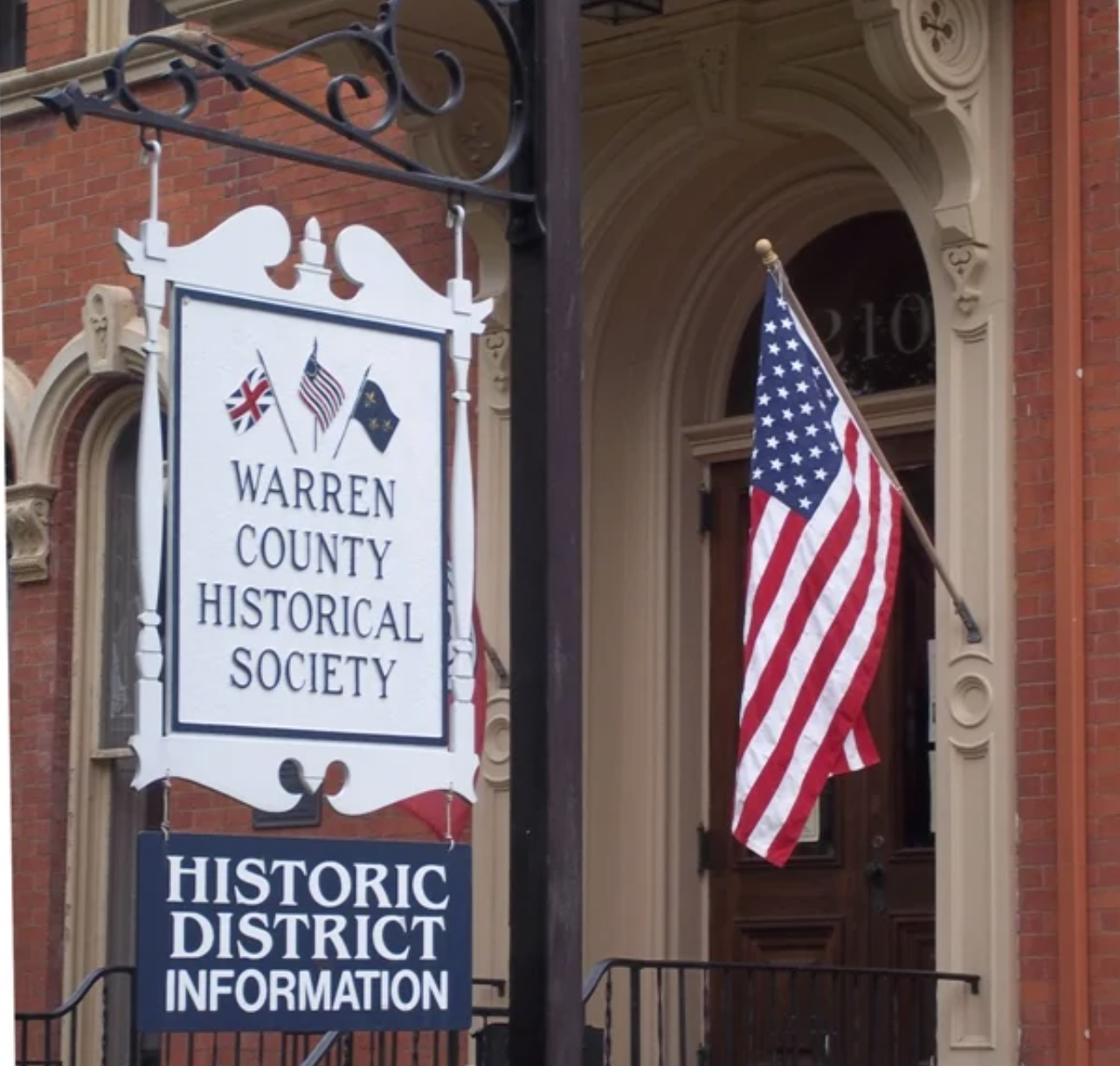
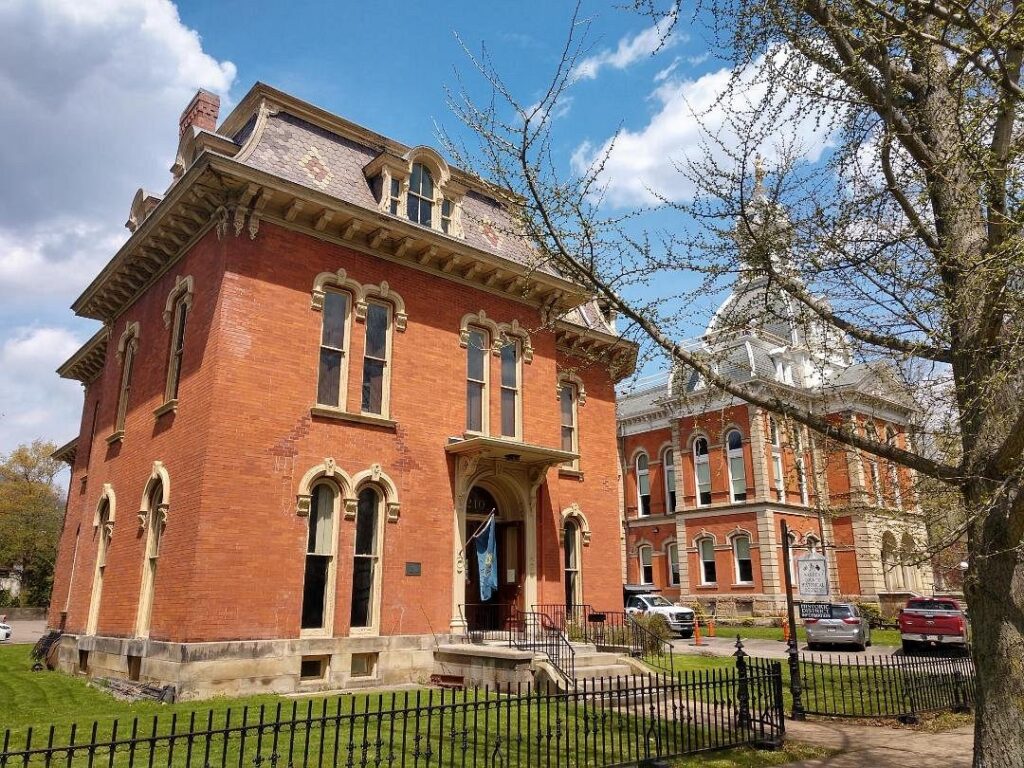
The Wilder Museum of the Warren County Historical Society in Irvine, Pennsylvania, will host an antique firearms display on Saturday, October 10, 2026. The free public event will feature historian and collector Brad Bogart from 1 to 5 p.m. at 51 Erie Avenue.
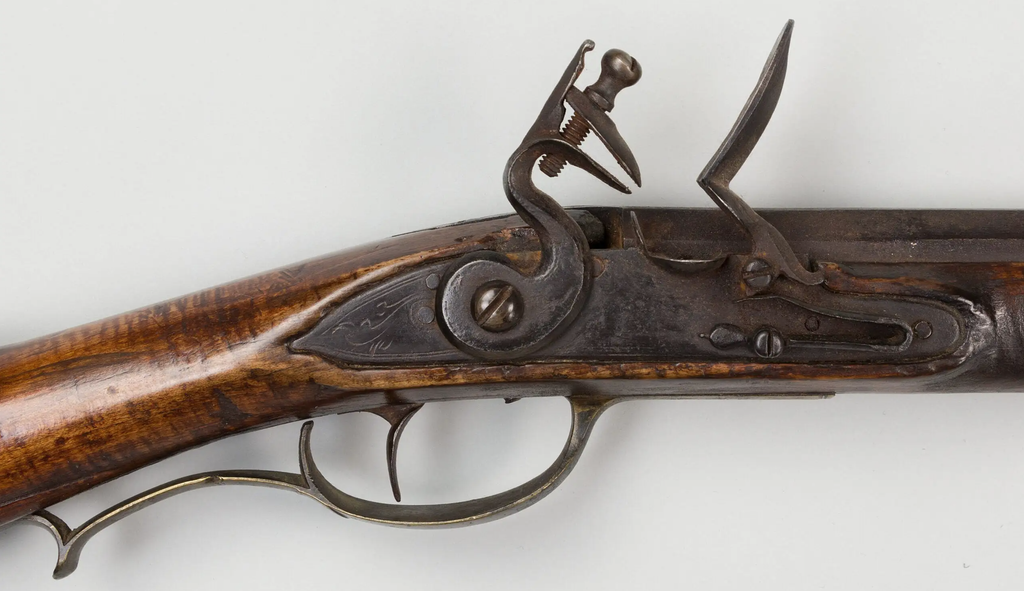
Bogart’s collection includes Kentucky rifles, powder horns, knives, and tomahawks. Organizers list arms from the French and Indian War and the American Revolution among the featured material. The combination gives visitors a chance to consider early firearms alongside the equipment that accompanied them.
Bogart began collecting antique guns in 1972 after returning from Vietnam. He has belonged to the Kentucky Rifle Association since 1984, bringing decades of collecting experience to the event.
The display will occupy the museum’s Era-Gone-By Room, home to the Joseph DeFrees Antique Gun Collection. DeFrees was a Warren County native, inventor, and philanthropist. His collection includes Winchester rifles, a blunderbuss, and French dueling pistols. The museum’s tour guide identifies examples of the latter from the 1830s.
The setting places Bogart’s visiting collection within a broader presentation of local history. Housed in the former Irvine Elementary School, the museum belongs to the Warren County Historical Society. It displays more than 4,000 artifacts across more than 20 exhibits.
Firearms and military artifacts appear elsewhere in the building, too. The Military Wing covers subjects from the Revolutionary War through modern conflicts. The National Forge exhibit includes industrial equipment, military steelwork, and a 37 mm antitank gun, connecting the area’s industrial history with military production.
For collectors, the program offers an example of how private holdings can contribute to a public museum’s educational work. Bogart’s display adds material from a collection assembled over more than 50 years. Presenting it alongside the DeFrees collection gives visitors access to the work of two collectors in one setting.
The Smithsonian is undertaking a major conservation project on one of its most significant Revolutionary War military artifacts.
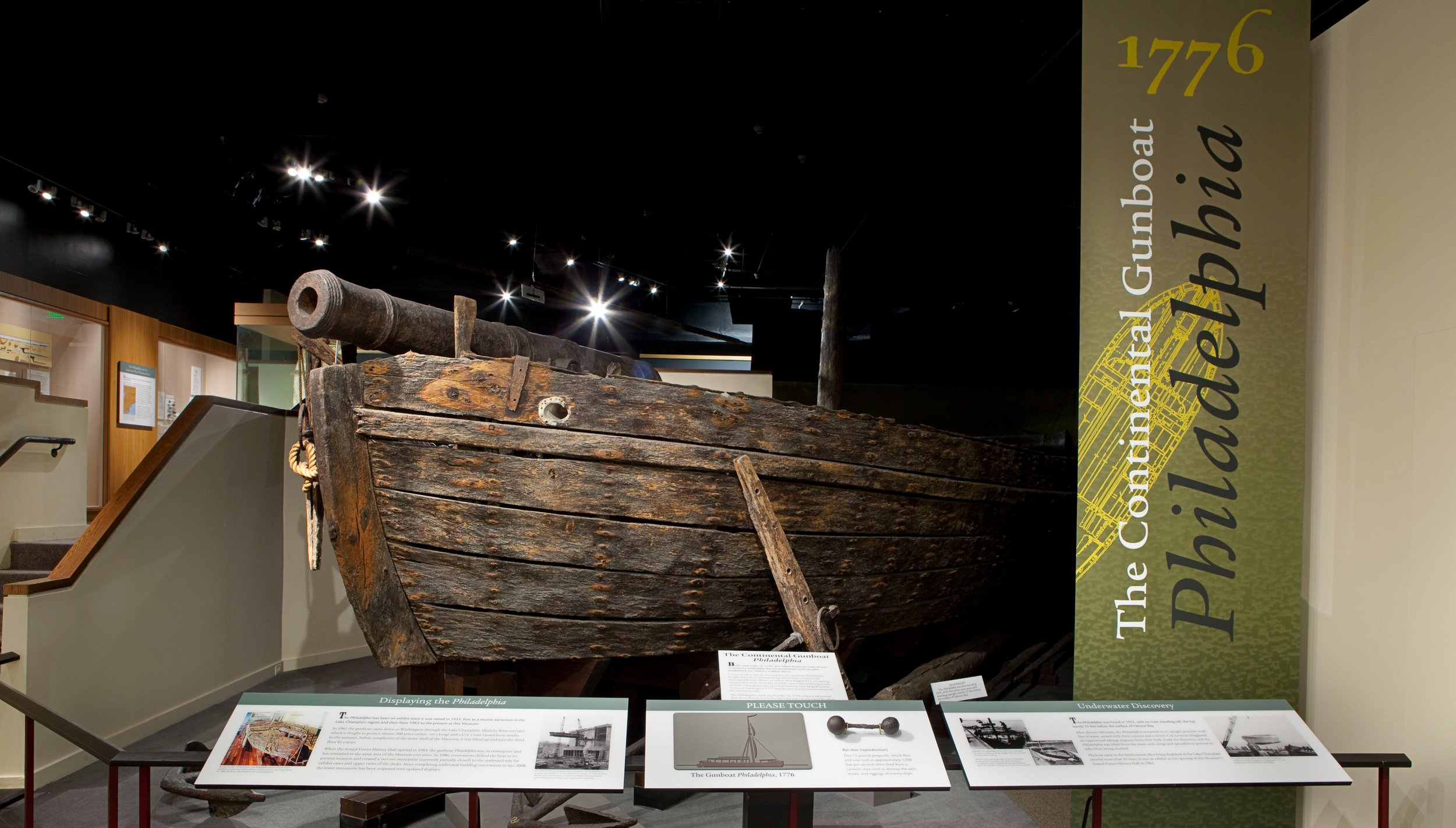
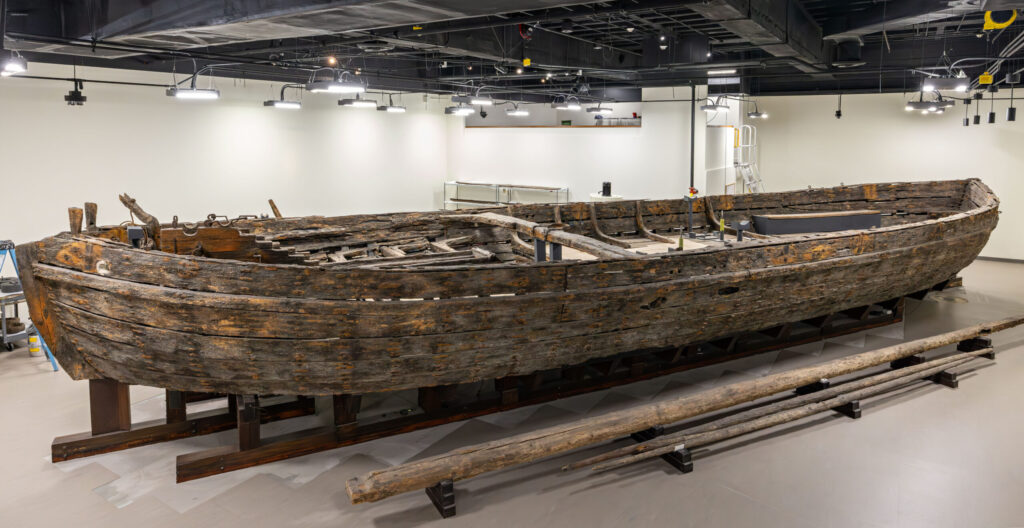
The gunboat Philadelphia still carries physical evidence from the fighting that sank it on Lake Champlain in 1776. Its surviving cannon, iron fittings, hull, battle damage, and associated artifacts preserve an unusually complete record of an American warship in combat.
Now the National Museum of American History is working to preserve that record for future generations.
The Philadelphia fought at the Battle of Valcour Island on October 11, 1776. Brig. Gen. Benedict Arnold commanded the small American fleet against a larger British force advancing south from Canada.
The Americans ultimately lost the battle. However, their resistance delayed the British advance and bought the Continental cause valuable time.
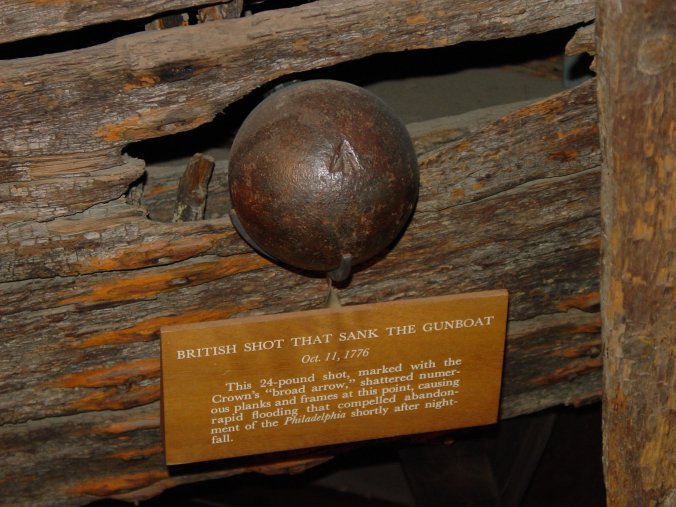
The Philadelphia did not survive the engagement. A British 24-pound cannonball struck the vessel near its bow. The shot shattered planks and frames and caused rapid flooding. The gunboat sank shortly after nightfall.
That projectile still survives with the vessel.
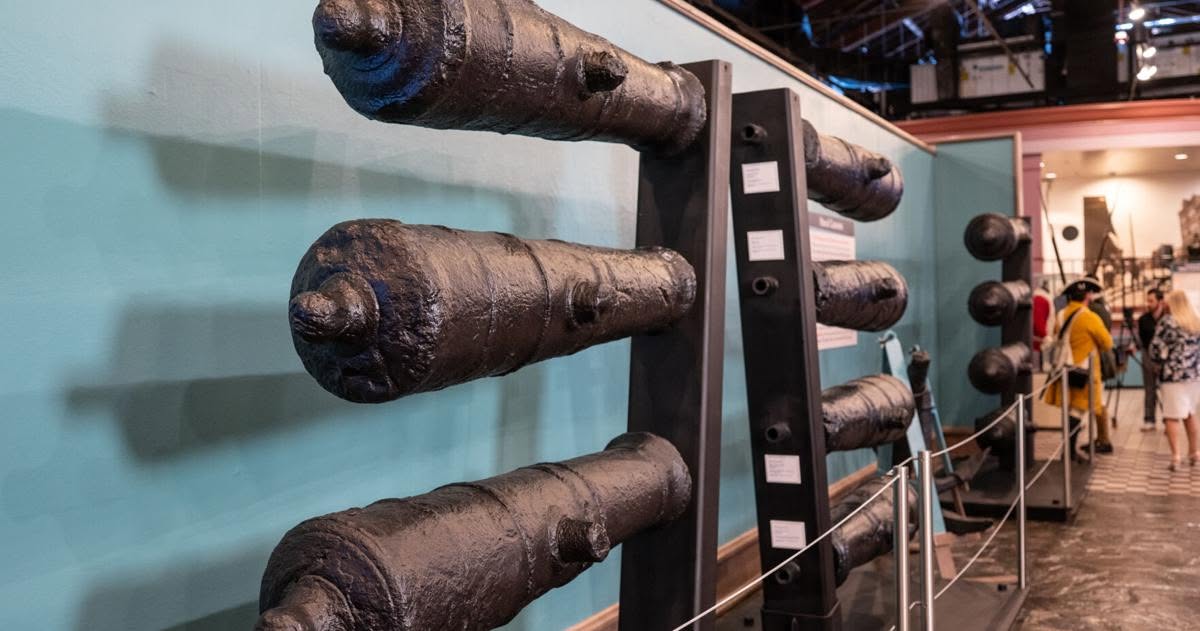
The Smithsonian also preserves much of the Philadelphia’s original armament and equipment. The collection includes a Swedish-made 12-pound bow gun and a British 3/4-pound swivel gun. Conservation photographs also document a surviving 9-pound cannon aboard the vessel.
Those guns make the Philadelphia especially important to arms historians. Collectors often encounter historic weapons after their original context has disappeared. A surviving firearm may lack documentation about where it served, who used it, or what happened around it.
The Philadelphia presents almost the opposite situation. The vessel, its weapons, fittings, battle damage, and the projectile that sank it all remain tied to one documented event. Researchers can study those objects as parts of a complete military system rather than as isolated artifacts.
The wreck remained underwater for nearly 160 years. Salvage engineer Lorenzo F. Hagglund recovered the Philadelphia from Lake Champlain in 1935. He displayed it around the region for more than two decades before the Smithsonian acquired the vessel.
The museum eventually placed the gunboat on permanent exhibition. Decades of display created new preservation problems.
The vessel’s wooden timbers continued to shrink after their long immersion. Its iron components also began to deteriorate. Conservators now monitor temperature, humidity, vibration, and other environmental factors that could affect the artifact.
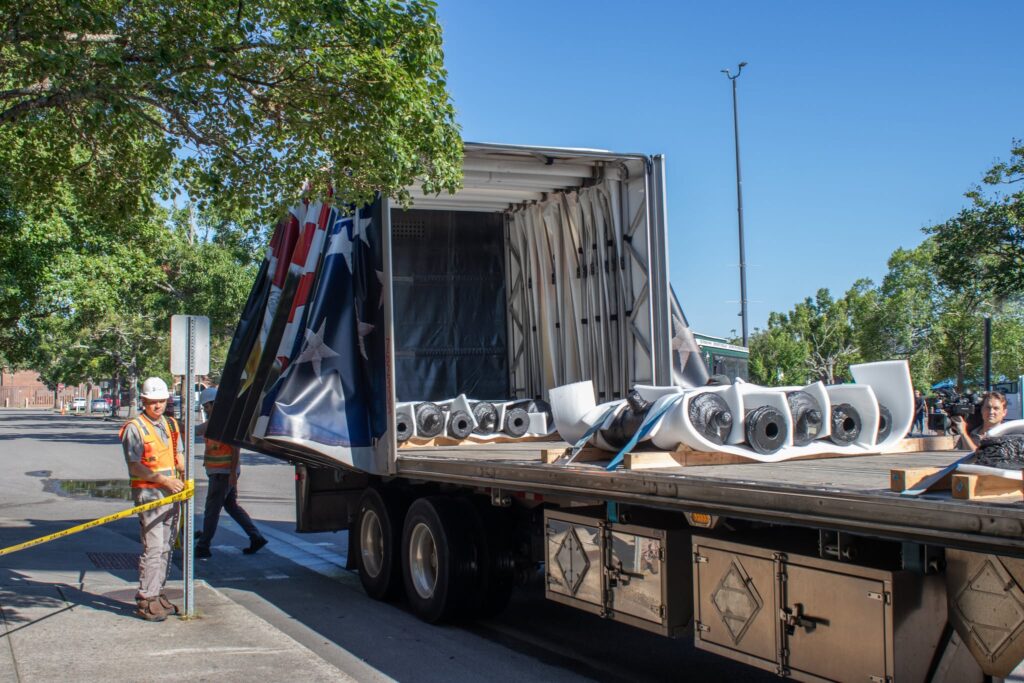
The Smithsonian has partnered with specialists from Texas A&M University’s Nautical Archaeology Program on the project. Their work includes the Philadelphia’s surviving artillery.
Conservators have removed old protective coatings from cannon, anchors, and other iron fittings. Earlier preservation efforts applied lacquer to slow corrosion. Modern specialists must remove those treatments before applying newer conservation materials.
That process illustrates an important reality of museum work. A treatment considered appropriate decades ago may eventually create new challenges. Conservators must preserve the original object while also addressing the effects of previous restoration work.
The project has produced less dramatic discoveries as well. Workers removed more than 150 pounds of sediment and accumulated debris from inside the vessel. They found rodent nests, trash, and coins dropped by museum visitors over the years.
The museum has also made the conservation process part of the exhibition. Visitors can watch specialists work through viewing windows surrounding the Philadelphia. That gives the public unusual access to a part of museum operations normally hidden behind laboratory doors.
The timing adds another layer of significance.
On October 8, the National Museum of American History will mark the 250th anniversary of the Philadelphia’s sinking. Museum staff and Texas A&M specialists will discuss the conservation project and new research surrounding the vessel.
The anniversary falls just three days before the actual 250th anniversary of the Battle of Valcour Island.
For firearms collectors, the Philadelphia offers far more than a Revolutionary War anniversary story. It demonstrates the value of preserving arms with their original context intact. It also shows how museums confront corrosion, aging wood, earlier conservation treatments, and long-term environmental damage.
A cannon standing alone can tell researchers a great deal, but a cannon preserved with its ship, associated equipment, battle damage, and the enemy projectile that sank it can tell them much more.
That makes the Philadelphia an unusually complete surviving Revolutionary War weapons system.
The Smithsonian is now working to make sure it remains that way for another generation.
Seventeen Revolutionary War-era cannons have returned to the surface in Savannah after spending nearly 250 years beneath the Savannah River.
The Savannah History Museum placed the conserved guns on public display this summer in its new exhibition, Loyalists & Liberty: Savannah in the American Revolution. The exhibit opened as part of Savannah’s America 250 commemorations.
Workers discovered the first cannon during dredging for the Savannah Harbor Expansion Project in 2021. Another dredge pass quickly uncovered two more. The U.S. Army Corps of Engineers then stopped work and brought archaeologists and divers into the area. The investigation eventually recovered complete and partial cannons along with other maritime artifacts.
Researchers believe the weapons may have come from the HMS Savannah or HMS Venus. British forces scuttled ships in the river in 1779. They hoped to prevent French naval forces from reaching Savannah during the Revolutionary War.
The September and October 1779 siege campaign ended with a disastrous Franco-American assault against British defenses. More than 800 men became casualties during the fighting around Savannah. The battle remains one of the Revolution’s bloodiest engagements.
Conservators faced a different battle after recovering the artillery.
Centuries underwater had saturated the iron with salts. Without extensive treatment, exposure to air could have caused rapid deterioration. Texas A&M University specialists conserved 17 of the guns before returning them to Georgia.
The museum deliberately left two additional cannons in their recovered condition. Visitors can now compare conserved artifacts with guns that still show the effects of centuries underwater.
The exhibition also includes three anchor fragments and other objects recovered from the river. The complete display covers approximately 3,000 square feet.
Some of the cannons retained remarkable evidence from their final moments of use. Investigators found original wooden plugs in several pieces. Some also contained gunpowder and cannonballs when recovered. Those surviving materials give researchers unusually direct evidence about how the guns were stored before they entered the river.
The precise identities of every cannon remain unsettled. Researchers have identified some as British-made pieces. Others follow French patterns that investigators have not yet tied to a specific vessel or military unit. That uncertainty leaves room for continued study.
For collectors and arms historians, the discovery represents far more than a cache of old artillery.
The guns survived together in an archaeological context connected to a specific Revolutionary War campaign. That context gives researchers something collectors rarely receive: physical objects, location, historical documentation, and associated artifacts preserved as parts of the same story.
The Savannah History Museum currently displays the cannons as part of Loyalists & Liberty. The museum operates the exhibition seven days a week during normal hours.
The Cody Firearms Museum is marking America’s 250th with an exhibition built around the firearms that armed both sides of the American Revolution.
Arms of the Revolution: America at 250, now open at the Cody Firearms Museum, brings together period firearms and projectiles. Some are from the museum’s collection and loans from Fort Ticonderoga and Minuteman National Historical Park. Some private collectors have also loaned their pieces to the exhibition.
The exhibition focuses on the weapons themselves and what they can reveal about the conflict. Displays compare arms used by Patriot and Loyalist forces to show both sides of the conflict.
Dramatic displays, including opposed muskets, an exploded-view firearm, and cutting-edge forensic analysis, reveal how arms shaped America’s fight for independence.
American long rifle from Fort Ticonderoga, Ticonderoga, NY
Among the exhibited firearms are a Spanish musket, an American longrifle, a Wilson musket, and a Royal Artillery carbine. Several pieces are on loan from the Fort Ticonderoga Museum Collection.
The museum also brought in firearms historians (and friends of TCW editor Logan Metesh) Erik Goldstein and Joel Bohy for programming during the opening.
For collectors, Arms of the Revolution offers something particularly valuable during the commemorations. It gives visitors the opportunity to examine original arms as historical evidence rather as illustrations of the broader story.
The Cody Firearms Museum is part of the Buffalo Bill Center of the West in Cody, Wyoming. If you’ve not visited before, I highly recommend that you do so.