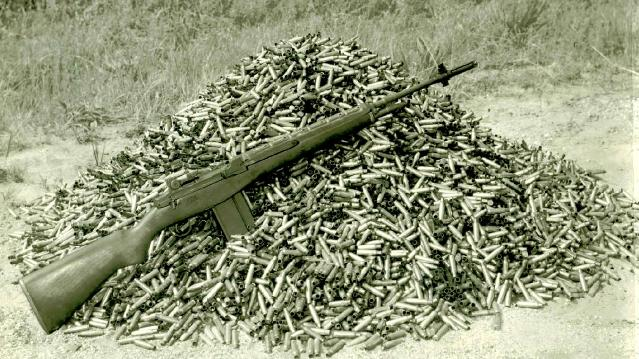
Nearly 27,000 surplus rifles have arrived in Anniston, Alabama, where conversion work is underway.
The Civilian Marksmanship Program is targeting mid-to-late January 2027 to begin online sales of surplus U.S. military M14 rifles. CMP aims to have several thousand rifles permanently converted to semiautomatic operation and ready for the first round of orders. The exact launch date and ordering details will follow, according to CMP’s Nov. 16 update.
CMP CEO Fabian Lobera said the organization is aiming to keep the price below $2,000 per rifle in regular sales. CMP is still assessing the rifles’ condition and deciding whether to sell them in different grades. It plans to auction a small number through GunBroker.
Lobera estimated in the video that another 100,000 to 120,000 rifles could arrive in 2027. CMP’s written update says it expects a larger transfer from the U.S. Army over the winter and projects more than 100,000 rifles for the program overall. Executive Chairman Jerry O’Keefe said more than 80 percent of the expected inventory was still to come, and CMP is still assessing which manufacturers are represented in the rifles it has received.
Membership Priority and State Availability
CMP is evaluating state-specific configurations for California and New York and plans to offer rifles for both states after the initial online release.
All three tiers of CMP’s new paid membership program offer the same processing priority for eligible M14 orders. The standard annual limit is two rifles. Silver raises it to three and Gold to four, as detailed in The Collector’s Wire’s coverage of the membership launch.
We’ll provide any project updates as they become available.
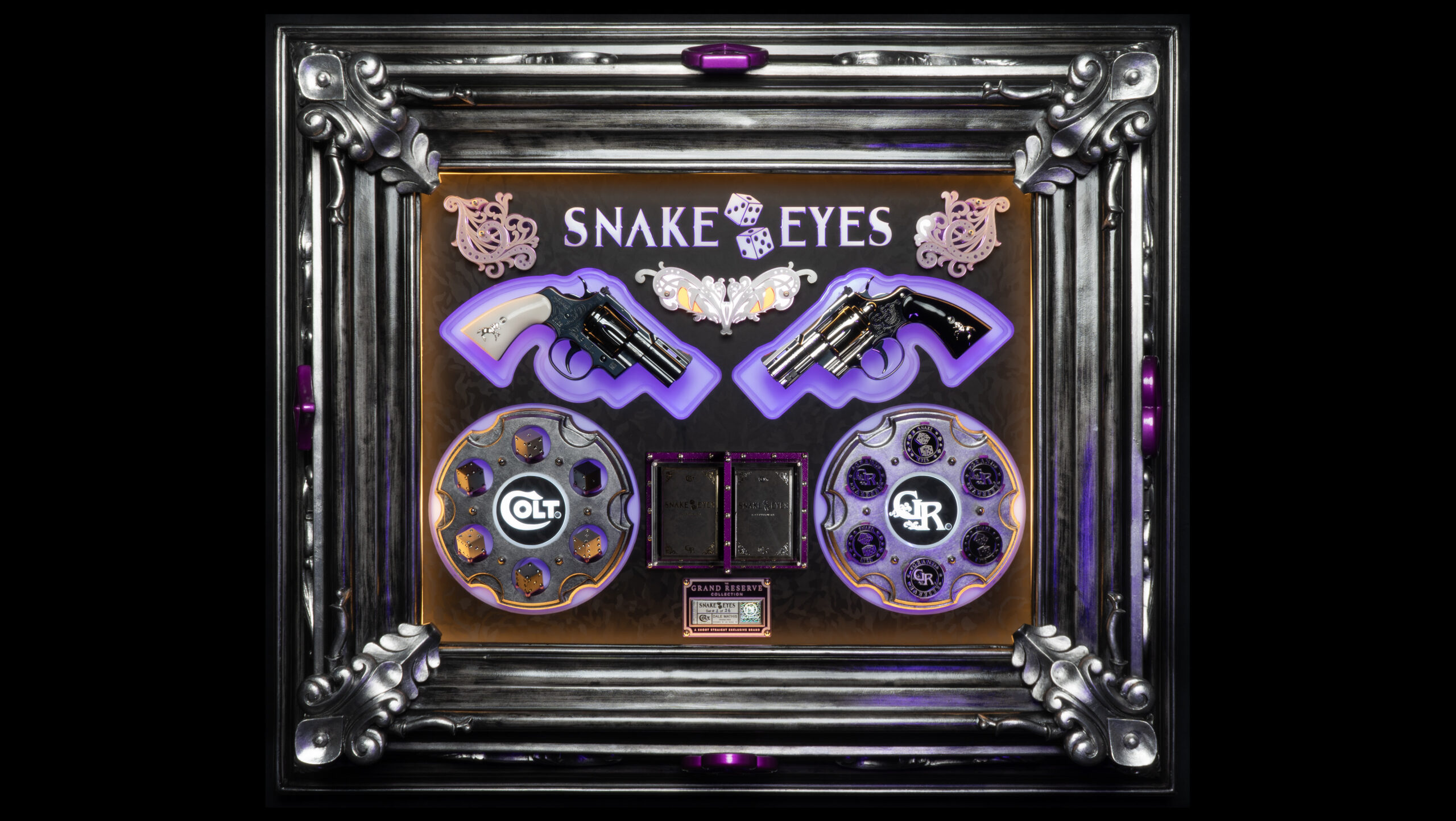
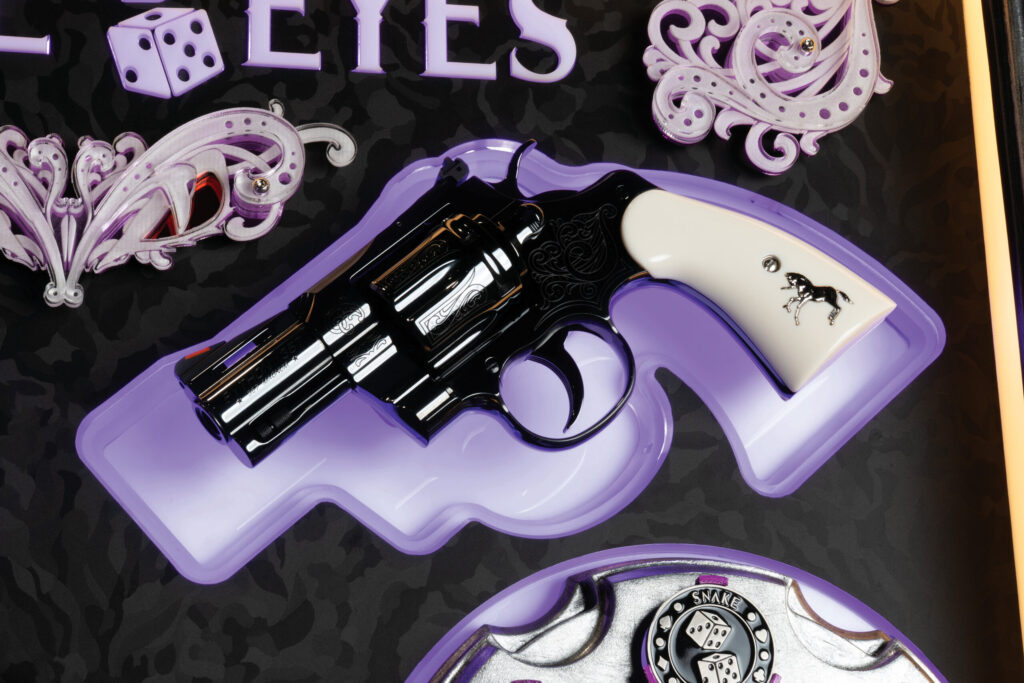
In 1989, Colt released the original Snake Eyes set, a matched pair of 2.5-inch Pythons that became one of the most sought-after collector sets the company ever made. The Grand Reserve Collection, Shoot Straight’s custom firearm brand and a longtime Colt partner, has reimagined it for a new generation of collectors.
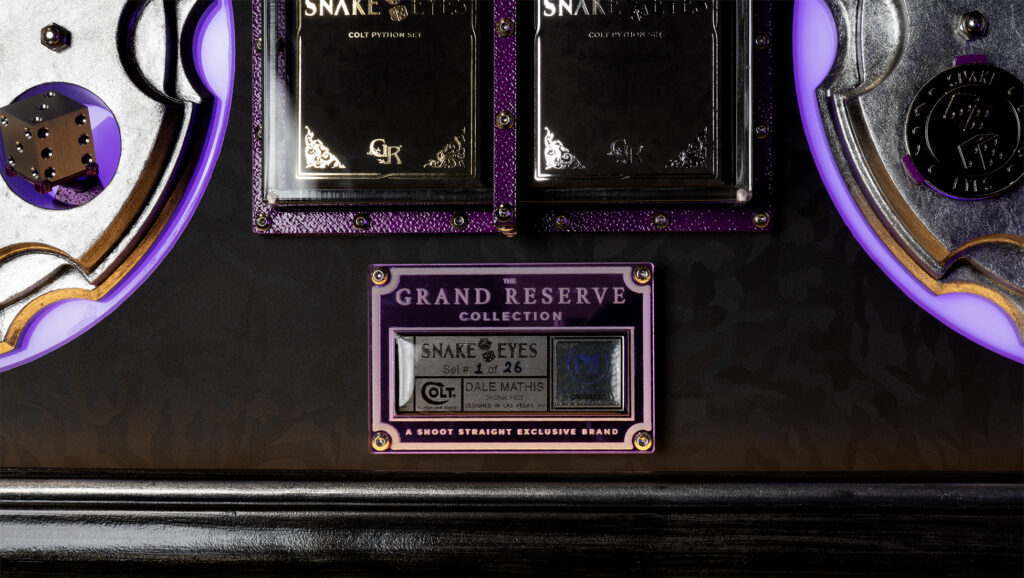
In collaboration with internationally exhibited mechanical sculptor Dale Mathis and the engravers at Baron Engraving, the team created a collection worthy of its name. Two custom-engraved, polished 2.5-inch Colt Pythons, presented in a handmade display. Only 26 individually numbered sets will ever be produced.
Each set is individually numbered, 1-26.
The price is set at $14,999 per set, and while that may initially seem steep, it isn’t necessarily unreasonable when viewed in the context of the original Snake Eyes sets and their performance on the collector market. Colt produced 500 sets in 1989, compared to just 26 for this new edition.
Despite that larger production run, original Snake Eyes sets command considerably higher prices when they come to market. A sampling of seven sales over the past couple of years saw prices ranging from $29,000 to $55,580, with an average of $36,898. Even an empty lighted presentation case from the original edition sold for $6,282.
Colt didn’t set an MSRP for the original set, allowing dealers to set the price. Most sold for $2,200 to $2,500. Adjusted for inflation, that’s $6,200 – which is what one of the empty cases sold for – and less than half of what one of the new sets costs.
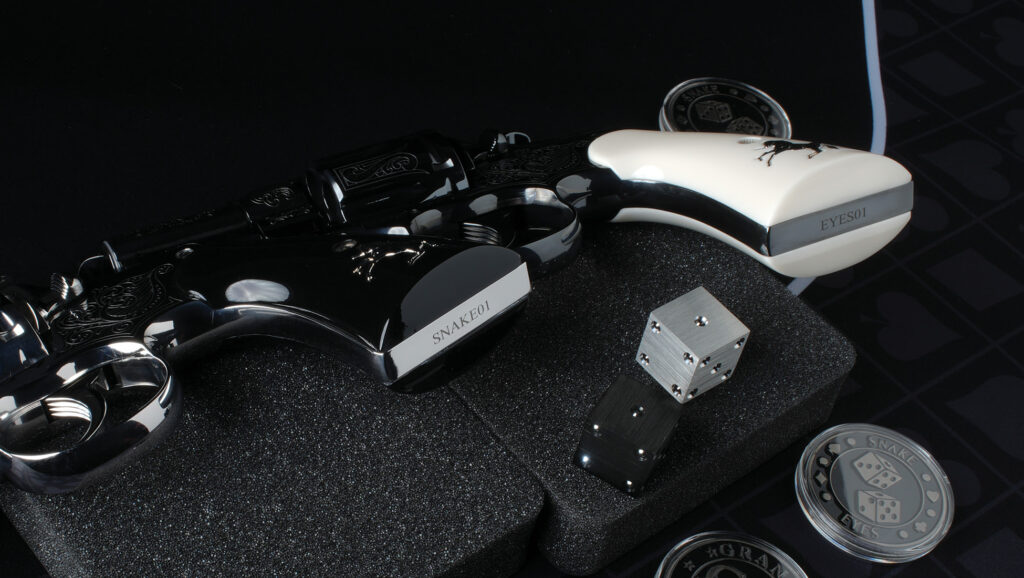
Each Python in the new sets is hand-engraved and polished by Baron Engraving. One reads SNAKE, the other EYES, a fresh turn on the original set, which numbered both guns the same.
Matching numbers run across both Pythons, the Presentation Display, and the certificate of authenticity. No set is ever sold apart.
One gun says SNAKE while the other says EYES
A handmade Presentation Display with integrated LED lighting, built to hang as a work of art in any den, game room, or collection.
The Presentation Display was designed by Dale Mathis, a mechanical sculptor whose work has been exhibited around the world. Every display ships with a numbered certificate of authenticity, a printed art booklet, a USB drive of digital content, a remote for the LED lighting, a wall mount bracket, and an instruction manual. The playing card decks inside are removable.
Of course, the market for the original sets is well established, while the long-term collector demand for this new edition remains to be seen.
If you’re willing to place your bets on the future value of one of the new Snake Eyes sets, you can find more details here.
The Model 1917 and Model 22 return with classic styling, modern manufacturing, and a few notable changes from their predecessors.
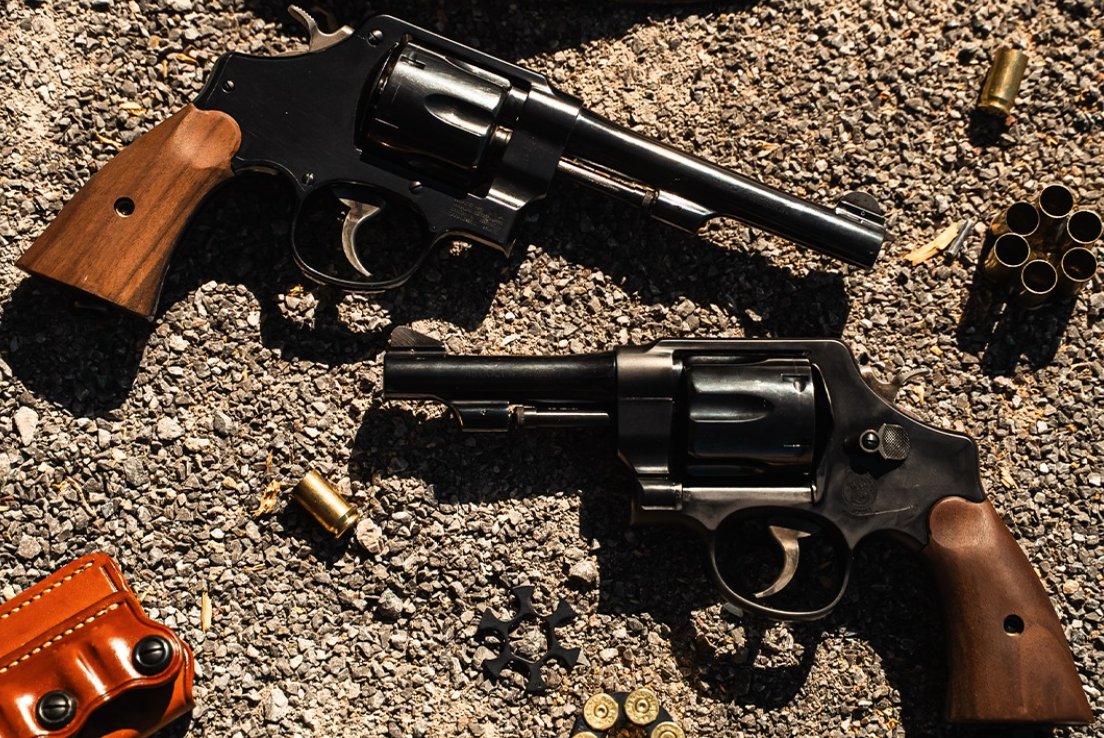
Smith & Wesson is reaching into its past with the introduction of two new revolvers inspired by its historic .45 caliber N-frame handguns. The Model 1917 Classic and Model 22 Classic bring back familiar designs with several modern refinements.
The announcement gives collectors an opportunity to revisit two revolvers with important places in American firearms history.
From the Trenches of World War I
When the United States entered World War I in 1917, the military faced a shortage of M1911 pistols. To supplement production, the government contracted with Smith & Wesson and Colt for revolvers chambered in .45 ACP.
The rimless cartridge presented a challenge for revolver extraction. The solution was the half-moon clip, which held three cartridges together and allowed simultaneous extraction. The arrangement became an enduring feature of .45 ACP revolvers.
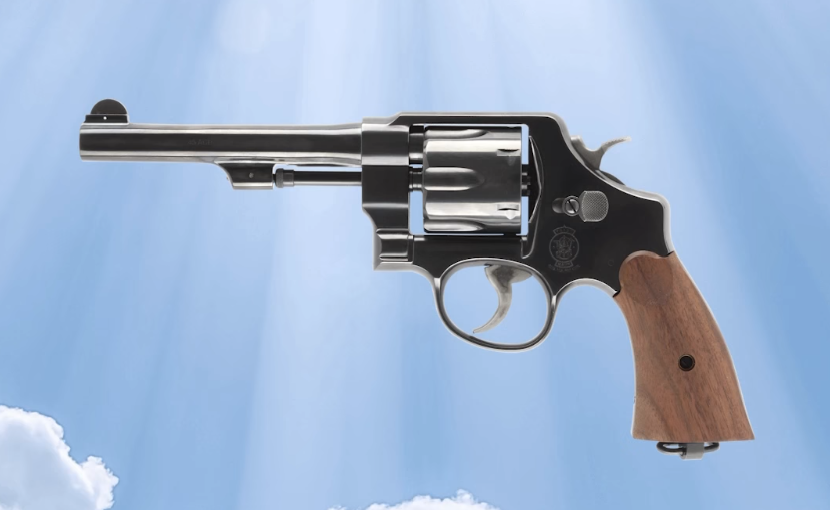
Model 1917 Classic
The new Model 1917 Classic closely follows the original military configuration. It features a 5.5-inch barrel, half-moon front sight, smooth walnut stocks, and a lanyard ring. The blued carbon steel revolver holds six rounds and accommodates both half-moon and full-moon clips.
Smith & Wesson has also omitted the internal lock, a feature many traditional revolver enthusiasts will appreciate.
A Different Kind of Classic
The second offering, the Model 22 Classic, takes a less historically rigid approach.
The original Model 22 descended from the postwar .45 Hand Ejector Model of 1950 Army. Smith & Wesson introduced the numbered Model 22 designation in 1957.
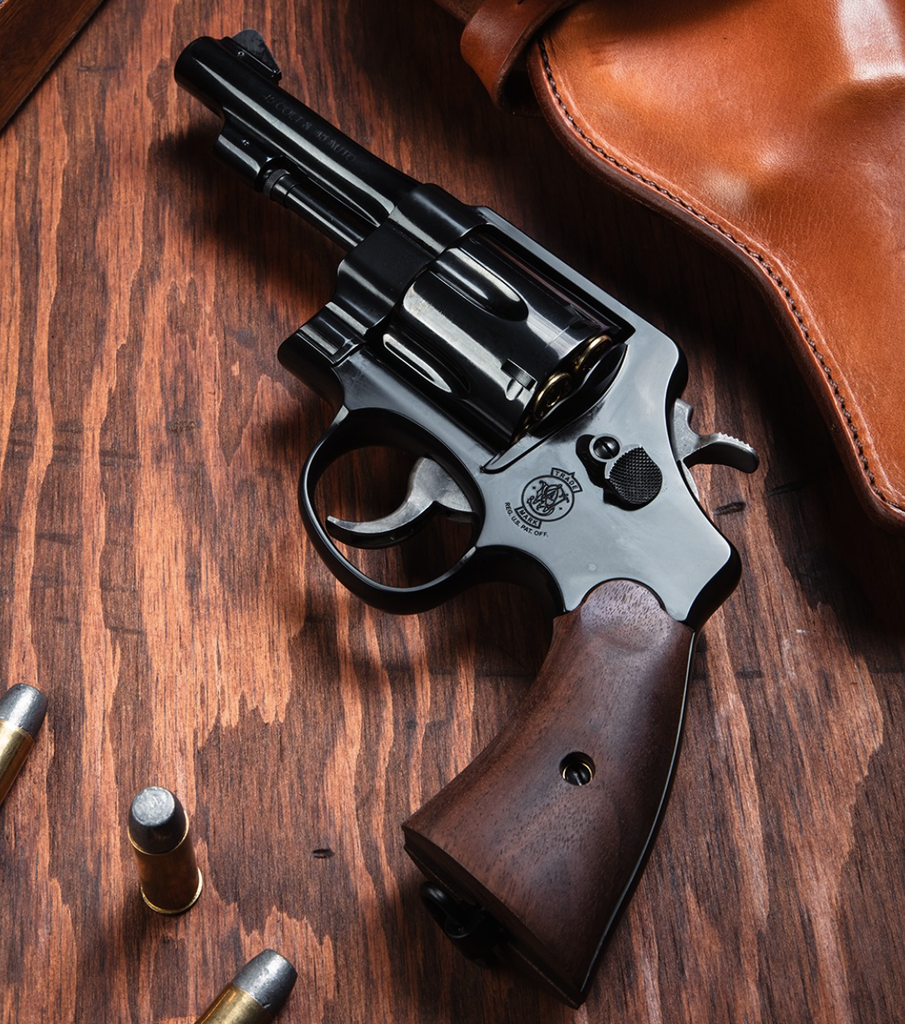
Model 22 Classic
The new version uses a shorter 4-inch barrel and serrated ramp front sight. More significantly, it chambers both .45 Colt and .45 ACP. The former can be loaded directly, while the latter requires moon clips.
Both revolvers feature double-action/single-action mechanisms and include five full-moon clips.
What It Means for Collectors
Although these revolvers reproduce historical designs, neither should be confused with an original military or midcentury production gun.
For collectors, that distinction matters. Original Model 1917 revolvers possess military history, period-correct markings, and potential provenance that modern reproductions cannot replicate. Likewise, the comparatively limited production of the original postwar Model 22 gives surviving examples a different collecting appeal.
However, reproductions offer something originals increasingly cannot: the opportunity to regularly shoot a historically inspired handgun without adding wear to a collectible example.
The introductions also come as Smith & Wesson’s acquisition of Savage Arms has raised broader questions about how historic manufacturers approach discontinued designs and their collecting heritage.
The new releases also raise an interesting question about Smith & Wesson’s Classic Series. As interest in traditional revolvers continues, could other discontinued designs eventually return?
For now, the Model 1917 and Model 22 demonstrate that Smith & Wesson still sees commercial value in its extensive historical catalog.
Both revolvers carry a suggested retail price of $1,299.
New membership tiers support CMP scholarships and offer priority M14 processing, but collectors are divided over whether the benefits come at the expense of wider access.
The Civilian Marksmanship Program (CMP) announced a new paid membership program on November 9, 2026, giving collectors, competitors, and other supporters an opportunity to contribute directly to the organization while receiving exclusive benefits. Although the program directs all membership revenue toward scholarships, its purchasing privileges have already generated controversy among the CMP’s supporters.
The new membership program also comes as the CMP continues to adjust its sales policies for surplus firearms, including recent changes to its 1911 pistol purchase limits that The Collector’s Wire previously covered.
The new program introduces Bronze, Silver, and Gold memberships, with annual contributions ranging from $100 to $500. Introductory pricing is available through December 31, 2026, reducing first-year costs to $65, $150, and $300, respectively.
All three membership levels include priority processing for eligible orders of the CMP’s forthcoming semi-automatic M14 rifles, as well as commemorative hats and patches. Silver members may purchase up to three M14s annually, while Gold members may purchase up to four, compared with the standard limit of two.
Importantly, higher membership levels do not confer greater processing priority. According to the CMP’s published membership FAQ, all three tiers receive the same priority status over nonmembers, subject to availability and eligibility requirements.
A New Way to Qualify for CMP Purchases
One of the program’s more significant changes is that direct CMP membership will satisfy the affiliated-club membership requirement for purchasing firearms and other eligible products.
Historically, customers have generally met this requirement through organizations such as the Garand Collectors Association or other CMP-affiliated clubs. Those memberships will remain valid, and customers are not required to join the new program to continue making qualifying purchases.
CMP membership also does not eliminate other purchasing requirements, including citizenship verification, applicable marksmanship qualifications, and background checks.
Members must complete a CMP safety video and short quiz before their membership benefits can be activated.
Additional benefits are planned, including discounts on competitions, classes, and selected products, early registration opportunities, and dedicated member services. However, these are future offerings rather than guaranteed benefits available at launch.
Supporting the Next Generation
According to the CMP, 100 percent of membership contributions will go directly to its Scholarship Fund, with the organization absorbing processing and handling fees.
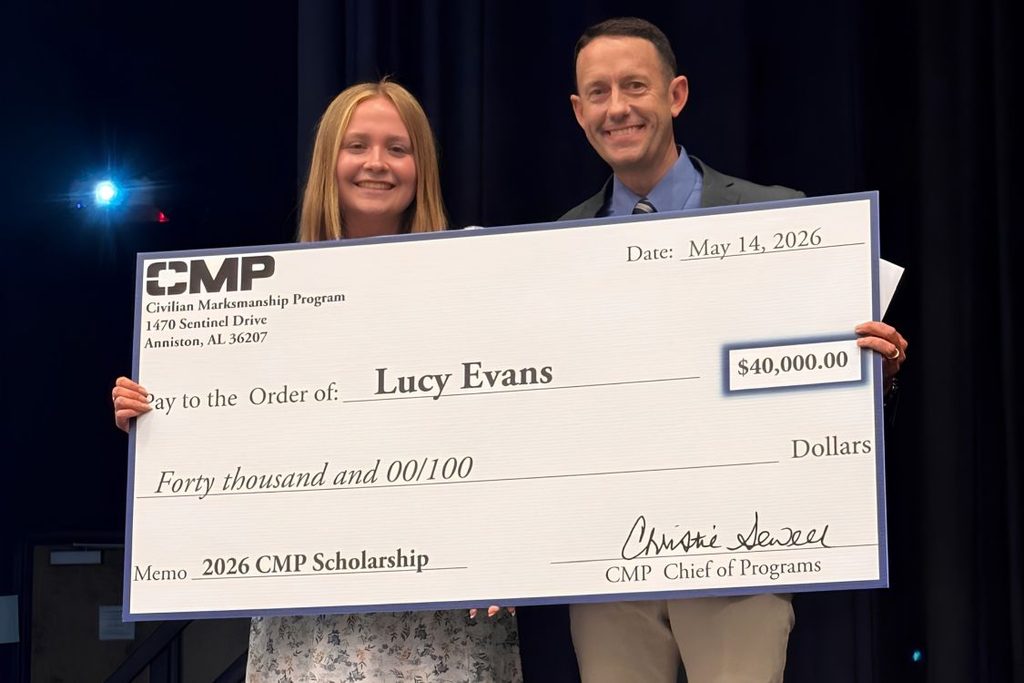
The scholarship program provides up to $1 million annually to qualifying students, with awards ranging from $1,000 to $40,000. Beginning with the 2026–2027 scholarship cycle, the program is also expanding to include current college students who continue participating in competitive marksmanship.
For supporters who value the CMP’s educational mission, this provides a direct way to fund the next generation of shooters.
Supporters Welcome the Opportunity
Initial reactions to the announcement included considerable enthusiasm, particularly from longtime CMP participants and military veterans.
Many people expressed their approval and intention to support the new program.
One man, whose involvement with the CMP and its predecessor dates to 1976, emphasized the organization’s role in teaching firearms safety, responsibility, discipline, and confidence to young shooters.
Others welcomed the opportunity to contribute more directly to scholarship funding or viewed the new program as a way to strengthen the broader CMP community.
Critics Question Purchase Limits and Priorities
Not everyone is enthusiastic, however. A recurring concern among commenters is whether increased purchase limits will make it more difficult for individual collectors and competitive shooters to obtain the limited number of M14 rifles expected to become available.
Several commenters argued that permitting higher-paying members to purchase additional rifles could encourage resale rather than participation in marksmanship activities.
One commenter acknowledged the program’s fundraising potential but argued that increasing purchase limits could undermine the CMP’s mission by reducing the number of people able to acquire historic service rifles.
Others raised similar objections, warning that purchasers could acquire multiple M14s and resell them at gun shows or through online auctions. These are concerns expressed by commenters, rather than documented instances involving the forthcoming M14 sales.
The criticism also reflects a broader philosophical disagreement over the CMP’s role: whether its primary purpose should be distributing surplus military firearms to collectors or ensuring that as many individuals as possible have access to equipment for marksmanship training and competition.
Other commenters questioned the value of additional annual membership fees, particularly when many already belong to affiliated clubs.
Some suggested that the CMP should place greater emphasis on reducing youth competition fees or offering benefits to average shooters rather than expanding purchasing privileges for those able to afford multiple rifles.
There were also requests for more immediate benefits, including ammunition shipping discounts, reduced range fees, and recognition of longstanding CMP involvement.
Questions Remain About Membership Terms
The CMP’s published information also contains several inconsistencies concerning membership renewal.
The organization’s online store states that introductory memberships automatically renew at the full annual price, while its linked membership FAQ says automatic renewal is not currently active.
Additionally, the original announcement identifies January 1, 2028, as the renewal date for early adopters, while the FAQ lists January 1, 2027.
The Terms of Service PDF linked from the membership page was also labeled as a draft for legal and executive review at the time of this writing.
Prospective members should verify the applicable renewal date, payment terms, and cancellation arrangements with the CMP before enrolling.
What Does This Mean for Collectors?
The membership announcement comes as the CMP prepares to begin selling surplus M14 rifles that have been permanently converted to semi-automatic operation.
The CMP previously indicated that M14 sales were expected to begin in January 2027, although final pricing, specific availability, and ordering procedures have not yet been announced.
For collectors interested in purchasing one of these rifles, membership offers a potential advantage through priority processing. For those interested primarily in supporting the organization’s mission, the scholarship contribution may be reason enough to join.
However, the debate surrounding expanded purchase limits raises a question that will likely continue as the M14 sales program develops: Should a program dedicated to promoting civilian marksmanship give individuals who contribute more money the opportunity to acquire more historic military firearms?
The answer may ultimately determine how the CMP’s newest membership initiative is received by the very community it is intended to serve.
The $160 million acquisition unites two historic American gunmakers, raising questions about Savage’s legacy, collector records, and discontinued models.
Smith & Wesson’s October 21 acquisition of Savage Arms made headlines throughout the firearms industry. The $160 million deal combines two of America’s oldest surviving gunmakers.
Of the $160 million, only $37.5 million was cash; the rest was in stocks. This is important to note because Savage was owned by JDH Capital, a private investment firm. With approximately 9 million shares of Smith & Wesson, JDH Capital is now the single-largest shareholder in the company. They also gained a seat on the Smith & Wesson board of directors, which now has seven members.
But beyond manufacturing capabilities and market share, the acquisition brings together more than 300 years of combined firearms history.
For collectors, that history raises questions that extend well beyond the company’s current product offerings.
Savage began manufacturing firearms in 1894 and introduced its Model 1899 lever-action rifle five years later. Renamed the Model 99, it became one of America’s most recognizable sporting rifles.
The company also produced the Model 1907 automatic pistol, Stevens firearms, and military arms during both world wars.
Savage acquired Stevens in 1920 and A.H. Fox Gun Company in 1930. These acquisitions brought additional historic names and manufacturing traditions into the Savage organization.
Now Savage itself has changed hands.
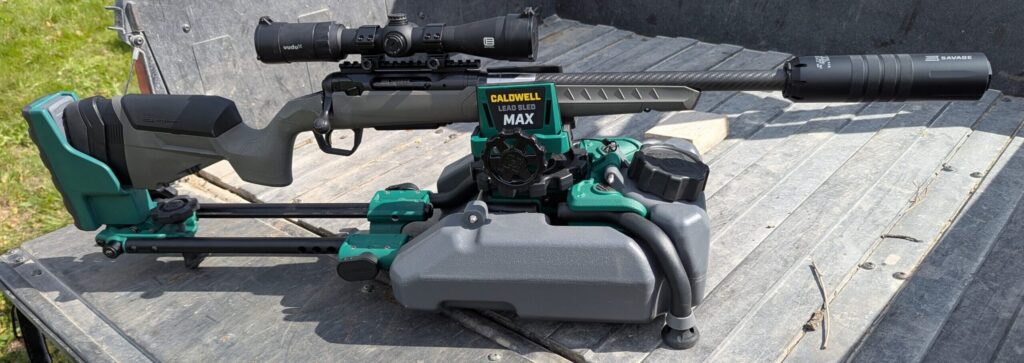
Smith & Wesson’s acquisition expands its presence in hunting and bolt-action rifles, particularly through Savage’s established Model 110 platform.
Savage 110 rifle with a Savage AccuCan AC30 B.O.B. suppressor
However, the company’s October 21 announcement offered no specific plans for reintroducing discontinued Savage models or expanding historical collector services.
That distinction matters.
Collectors may naturally wonder whether the acquisition could revive interest in classics like the Model 99. Yet a change in corporate ownership does not automatically make discontinued designs economically practical to manufacture.
The Model 99, for example, last appeared in Savage’s production timeline in 1998. [Ed. note: When I interviewed Savage CEO Chris Bezzina in 2025, he said the Model 99 would never come back due to production costs.]
Another important consideration involves the company’s historical records.
The museum assumed responsibility for preserving these materials and providing historical research services for collectors.
Consequently, the acquisition does not mean Smith & Wesson has suddenly acquired direct control of Savage’s historical factory records. (Smith & Wesson doesn’t even have its own historical factory records. They are part of the Smith & Wesson Historical Foundation.)
That separation is significant for collectors seeking factory documentation, original shipping information, or historical identification assistance.
Smith & Wesson maintains its own extensive collecting tradition, supported by generations of research into the company’s revolvers, pistols, and long guns.
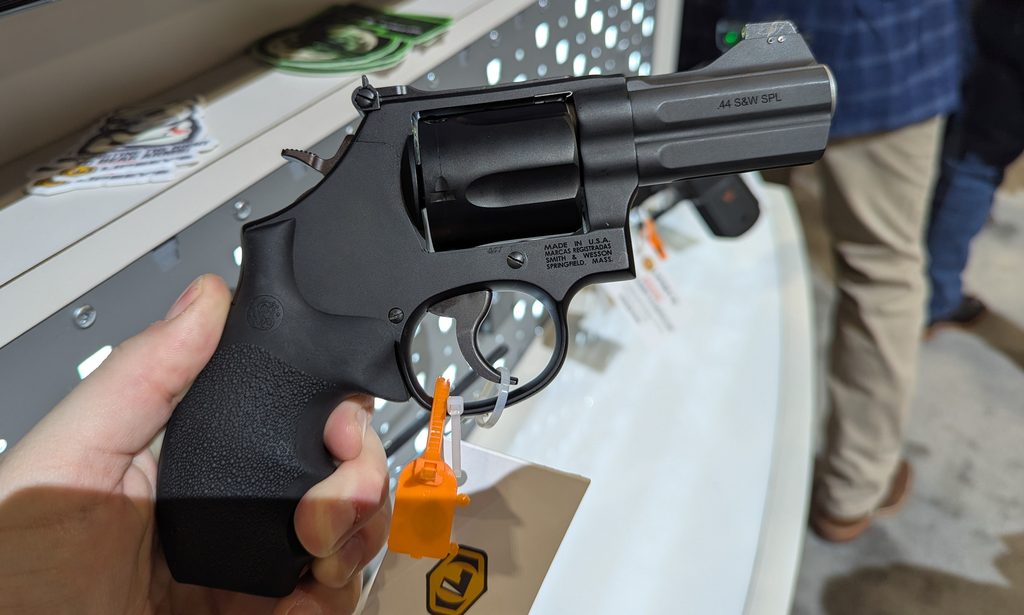
Smith & Wesson Night Guard revolver at SHOT Show 2026
Whether the acquisition eventually creates opportunities for expanded historical services remains unknown.
The immediate transaction is primarily about combining manufacturing capabilities and strengthening Smith & Wesson’s position in the hunting market.
But Savage’s history encompasses considerably more than its current product catalog.
For collectors, the most important developments may involve how the new ownership approaches that heritage, preserves historical knowledge, and supports the firearms that established Savage’s reputation.
Whatever happens, Savage’s place in American firearms history remains unchanged by the ownership of the company whose name they bear, and we can only hope that a private investment firm now being S&W’s largest shareholder of stock and a member of their board doesn’t spell problems for them later.
With discounts averaging approximately 20% and some firearms marked down as much as 40%, collectors have until midnight Eastern on October 31 to take advantage of the sale.
Old Western Scrounger is offering sale pricing across its online firearms inventory, giving collectors an opportunity to revisit a selection that goes well beyond ordinary commercial firearms.
Known for its unusual ammunition, military surplus arms, and vintage firearms, the company has long occupied a distinctive position in the collecting community. Its inventory has included everything from historic military rifles and European service pistols to sporting arms that rarely appear in conventional gun stores.
For collectors, the significance of a sale like this isn’t simply the possibility of paying less. It’s the opportunity to examine firearms that may be difficult to find elsewhere, especially as the availability of imported military surplus continues to change.
Discounts average approximately 20% across the firearms inventory, with selected items reduced by 30% and even 40%. The sale ends at midnight Eastern on Saturday, October 31, 2026.
Old Western Scrounger traces its roots to the 1970s, when David “Dangerous Dave” Cumberland built a business supplying obsolete and hard-to-find ammunition. It became a familiar name among collectors trying to keep unusual military and sporting firearms shooting.
The company was later acquired by Val Forgett III, whose family founded Navy Arms in 1957. Today, both businesses operate under his leadership, continuing a longstanding tradition of importing and distributing historically interesting firearms.
Three Firearms Worth a Closer Look
Russian-made Baikal shotguns offer a different collecting opportunity. Known for their rugged construction and straightforward designs, these sporting arms appeal to enthusiasts interested in Russian firearms manufacturing and imported shotguns.
Also included are OWS coach guns, short-barreled double-barrel shotguns that recall the practical firearms associated with nineteenth-century American transportation and frontier life. While modern reproductions lack the provenance of original antiques, they offer a connection to a traditional firearm design.
The French MAC 50 pistols are another noteworthy offering. Adopted in 1950, these 9mm semiautomatic pistols served France for decades. Surplus examples give collectors a tangible connection to postwar French military history, particularly when original markings and service features remain intact.
What Collectors Should Consider
As with any surplus firearm purchase, the advertised discount is only part of the equation. Condition, originality, matching serial numbers, import markings, and the presence of original accessories can significantly influence collector value.
Buyers should examine individual descriptions carefully. Surplus firearms may show varying degrees of finish wear, refurbishment, or replacement parts. Photographs of the actual firearm, rather than a representative example, can be especially valuable.
Collectors should also account for ammunition availability, replacement parts, accessories, shipping, and transfer fees.
With the sale ending Saturday night, interested collectors have a limited window to examine the available inventory. The complete selection can be viewed through the Old Western Scrounger firearms listings. Pricing and availability are subject to change.
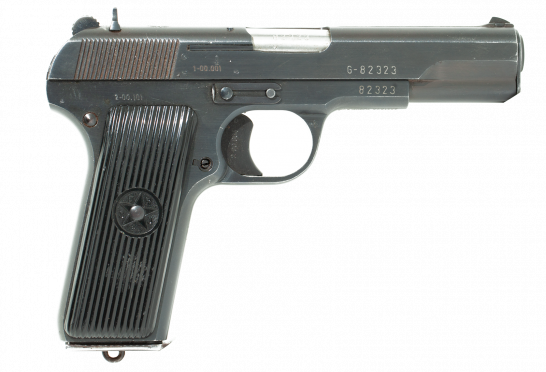
Surplus Yugoslavian M57 Tokarev pistols for $269.99 give collectors yet another option below the $300 mark. The Zastava-made handguns remained in stock online when checked on October 24.
The listing reinforces a point from our recent coverage of surplus Beretta 84 BB and M1934 pistols: affordable surplus still exists. The familiar bargains have changed, but collectors can still find historically interesting firearms without spending four figures. Looking beyond the Mosins and SKSs of earlier surplus waves opens other possibilities.
The M57 offers a distinctly Yugoslav chapter in the Tokarev story. Zastava based the pistol on the Soviet TT design, incorporating changes that included a longer grip and nine-round magazine. The model served with Yugoslavia’s army and police, giving it a place in Cold War small-arms history.
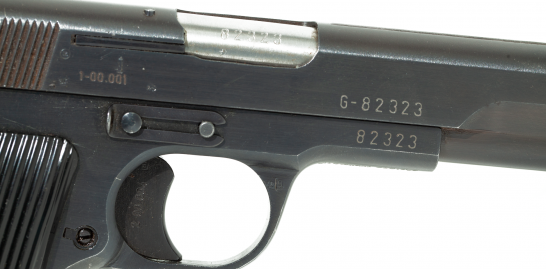
Yugo M57 serial numbers
Chambered for the 7.62x25mm Tokarev cartridge and featuring steel frames, fixed sights, and 4.6-inch barrels, each gun includes one nine-round magazine.
These pistols are sold as-is, with varying wear from use and storage. Some have polished parts; most retain bluing with wear marks. The listing photograph represents the lot’s average condition.
That variation creates opportunities for study. Collectors can examine markings, serial numbers, finish, and evidence of refurbishment when documenting an individual example. An M57 could anchor a Yugoslav collection or join a broader comparison of Tokarev variants.
Our earlier coverage of postwar Walther P38 surplus pistols explored another Cold War collecting opportunity. Those pistols carried a $549.99 price when we covered them. The M57 listing illustrates how much entry prices can differ across surplus handgun categories.
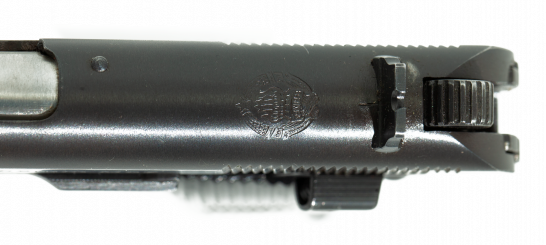
Yugoslavian crest on top of slide
An important note is that these guns will not ship this item to C&R license holders.
The collecting appeal extends beyond the price tag. These pistols offer an accessible starting point for researching a country’s service arms and their place within a larger design family. Affordable surplus collecting still has room for curiosity.
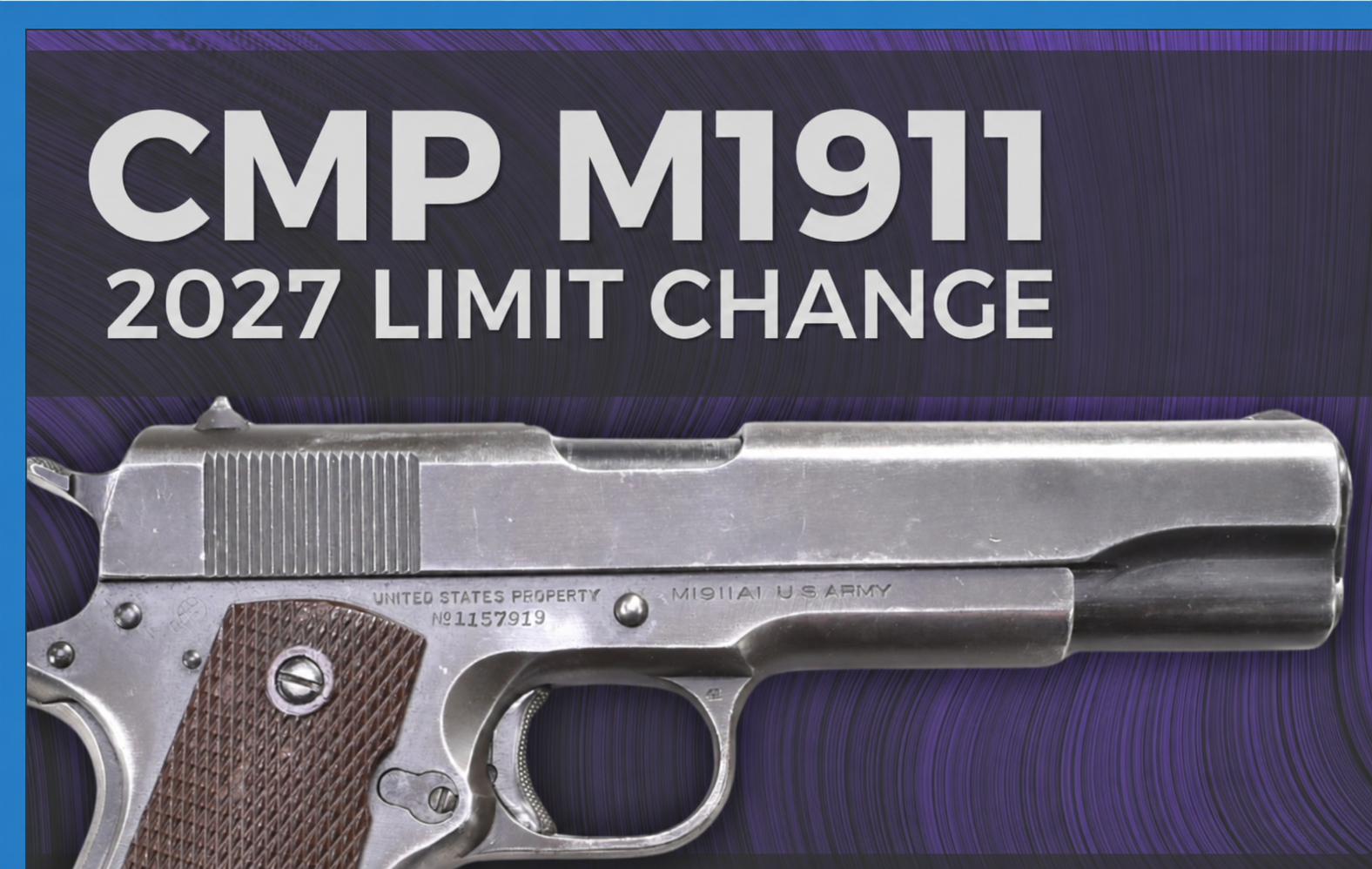
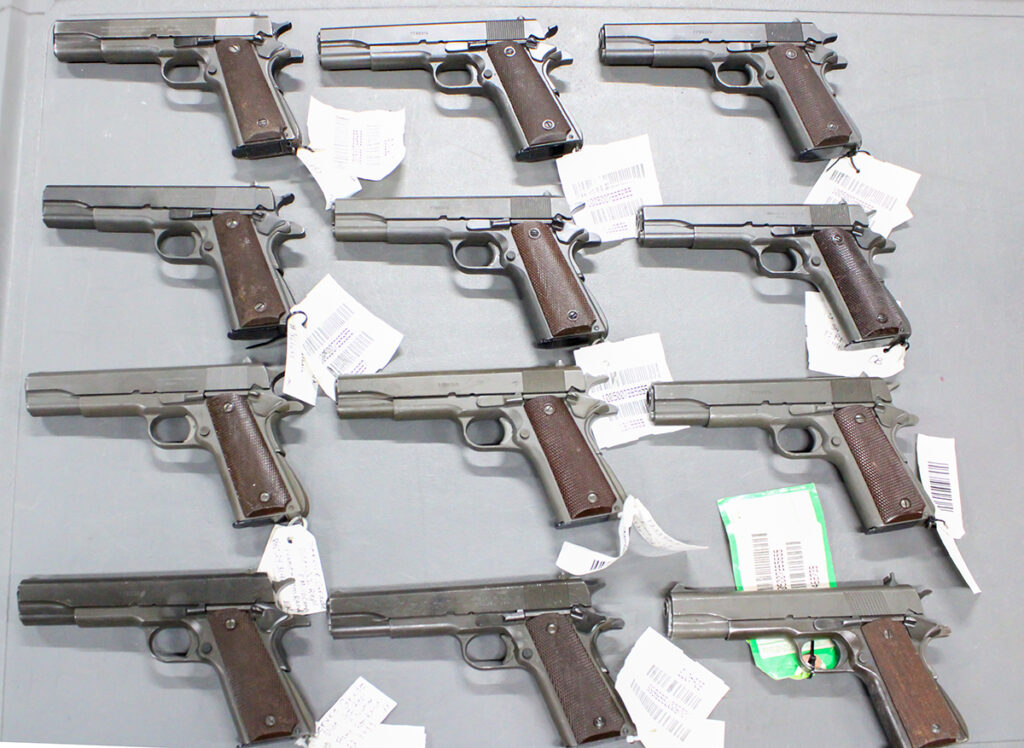
Collectors interested in purchasing surplus military M1911 and M1911A1 pistols through the Civilian Marksmanship Program (CMP) will face another change in purchasing limits beginning January 1, 2027.
The CMP’s updated sales information states that customers will be limited to two surplus 1911 pistols per calendar year starting in 2027. The change follows an earlier expansion that increased the lifetime purchase limit from two pistols to four in May 2025.
The distinction between lifetime and annual limits is important.
When CMP resumed surplus 1911 sales in January 2025, customers could purchase a maximum of two pistols over their lifetime. That restriction had previously limited collectors who wanted examples from multiple manufacturers or production periods.
In May 2025, the Department of the Army authorized an increase to four pistols per customer over their lifetime. The decision gave collectors additional opportunities to acquire these historic military sidearms.
Under the newly announced policy, the limit changes again. Beginning in January 2027, customers may purchase two pistols annually rather than operating under the previously announced four-pistol lifetime maximum.
For collectors, the annual limit could represent a significant long-term improvement. Those interested in building representative collections of U.S. military 1911 pistols would no longer face the same lifetime restriction, assuming the new policy replaces that cap as written.
On the other hand, we could witness the “Gun Show Garand” problem all over again. That is, some people will go through the extra steps to buy their annual limit (in this case, 12 Garand rifles) and then mark them up significantly on the secondary market for those who do not want to deal with the CMP purchase process.
The marked up prices don’t necessarily sell, but it does create frustration for those in the market for a Garand online or at a local gun show.
Since the limit is so much lower for the 1911 pistols, it may not be an issue. Only time will tell.
The CMP currently lists Service Grade pistols at $1,300, Field Grade at $1,200, and Rack Grade at $1,100. Pistols are inspected and test-fired before sale.
The program offers collectors access to genuine U.S. military-issued firearms, although the CMP notes that approximately 98% of the pistols received from the Army contain mixed components.
Ruger has announced sweeping changes to its firearms lineup, suspending or ending production of numerous longstanding models. The decision affects some of the company’s most recognizable revolvers, pistols, and rifles.
While the changes reflect Ruger’s evolving business strategy, they also carry significant implications for firearms collectors and the secondary market.
Ruger immediately suspended production of its LCR, SP101, GP100, and Bearcat revolvers.
Additional models will complete their final production runs by the end of 2026. These include the Blackhawk, Super Blackhawk, Vaquero, Redhawk, Super Redhawk, and Single-Series revolvers. The SR1911 pistol, No. 1 single-shot rifle, 77-Series rifles, Hawkeye, Ruger Precision Rifle, and several pistol-caliber carbines also face production changes.
Ruger emphasized that these decisions do not necessarily represent permanent discontinuations. The company may eventually reintroduce some product families with updated designs and manufacturing methods.
For collectors, the most significant developments involve Ruger’s traditional revolvers and sporting rifles.
The Blackhawk, introduced in 1955, helped establish Ruger’s reputation for durable, affordable single-action revolvers in centerfire calibers. The No. 1, introduced in the 1960s, developed a dedicated following among enthusiasts of traditional single-shot rifles.
Both platforms have extensive histories spanning numerous configurations, calibers, and special editions.
Their removal from regular production could generate renewed interest in discontinued variations, particularly those already considered scarce or desirable.
However, discontinuation alone does not guarantee increased collector value.
Production numbers, condition, originality, configuration, and existing collector demand remain the primary factors determining market prices.
Common examples produced in large quantities may see little appreciation. For example, more than two million Blackhawk revolvers have been made in the last seven decades.
Limited-production variations, unusual chamberings, and exceptionally preserved examples could attract greater attention.
The distinction between discontinued designs and discontinued generations also matters. Ruger has explicitly left the door open for future versions of these firearms.
If updated models eventually return, collectors may distinguish original-production examples from their modern replacements.
Ruger’s decision also creates an opportunity to examine the company’s place in the collector market.
For decades, Ruger firearms have occupied an interesting position between practical sporting guns and dedicated collectibles.
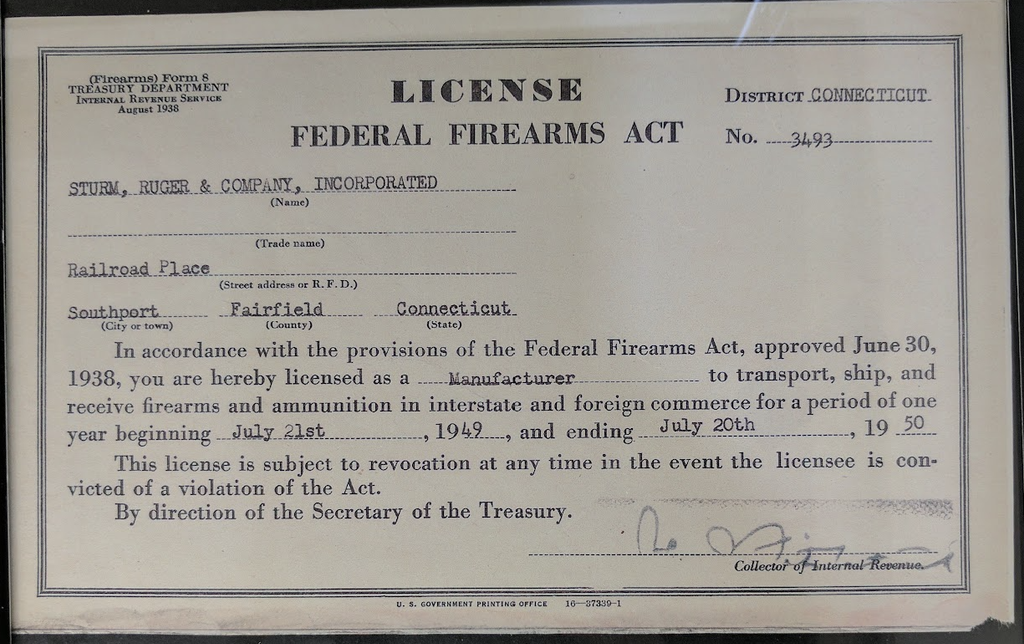
Ruger’s first FFL, issued July 21, 1949
Models like the Bearcat, Blackhawk, and No. 1 have established collector followings. Meanwhile, special editions, limited chamberings, and distributor exclusives have created specialized collecting niches.
The latest announcement could expand interest in these areas as enthusiasts reconsider the historical significance of the outgoing models.
Collectors should document serial numbers, original configurations, factory packaging, and accompanying paperwork. Such details can prove especially important when distinguishing uncommon variations from standard-production firearms.
Ultimately, Ruger’s announcement represents a significant turning point in the company’s manufacturing history. While nothing has been said officially, plenty of speculation as to why this is happening how seems to coincide with Beretta’s interest in acquiring 25% of the company.
Whether it also becomes a turning point in Ruger collecting will depend on future production decisions and the secondary market’s response.
For now, collectors have a new reason to watch Ruger prices, production announcements, and upcoming auctions closely.
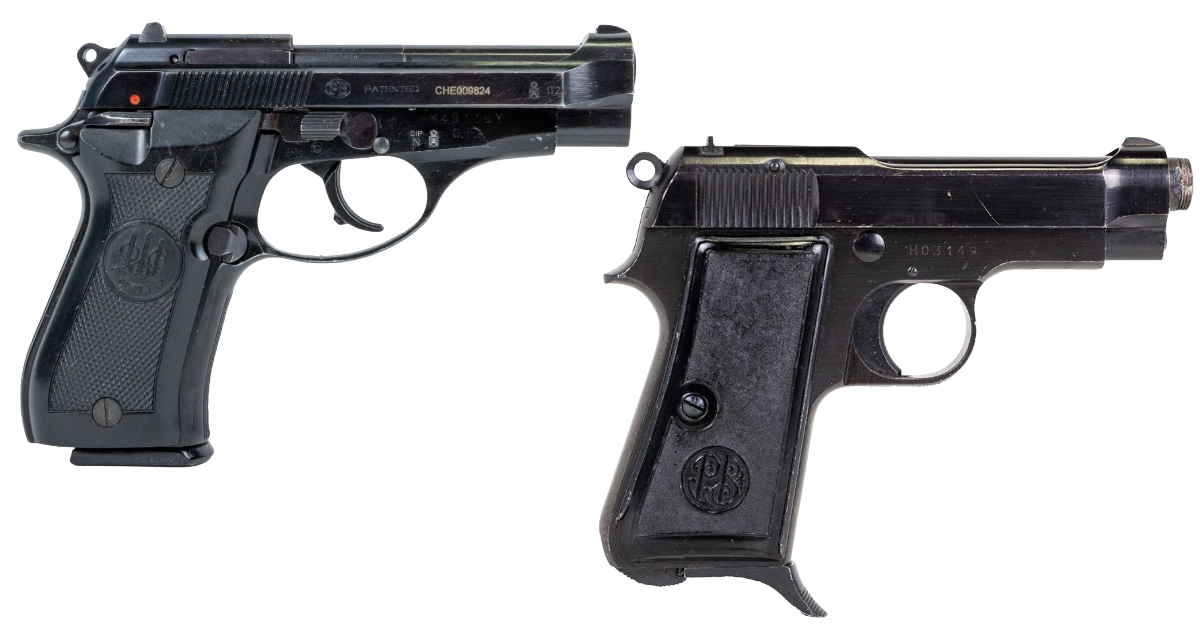
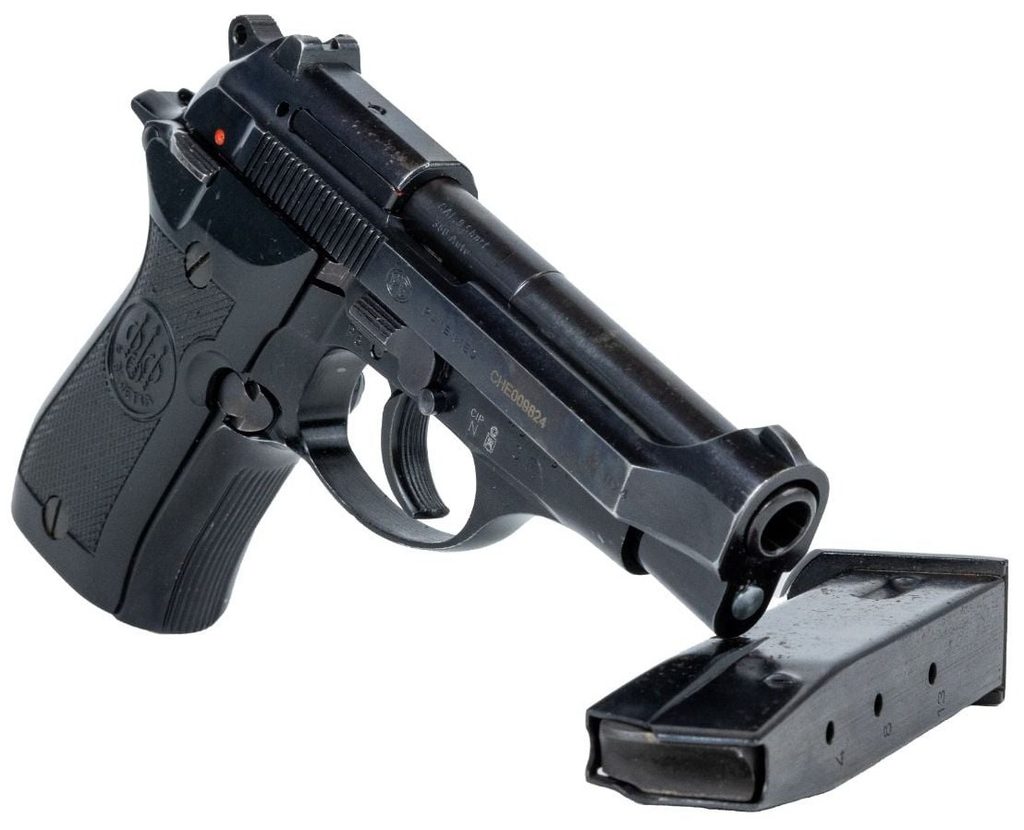
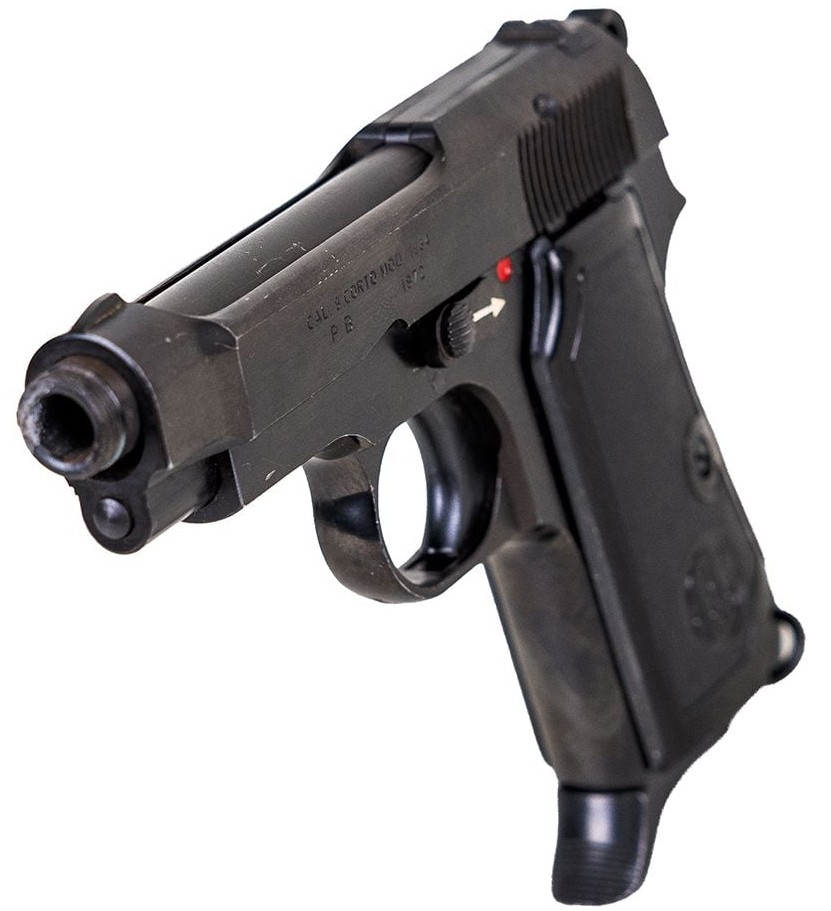
Previously in use by Italian law enforcement departments, a large grouping of Beretta 84 BB and Beretta M1934 pistols are available to collectors right now.
People tend to think that the era of affordable surplus guns is long gone. That’s simply not the case; they still exist, but they’re not what they used to be. Mosins and SKSs for $300 or less are indeed a thing of the past, but sub-$300 surplus guns can still be had.
Beretta 84 BB
Case in point: Beretta 84 BB and Beretta M1934 pistols are both available at the time of writing for less than $300 and less than $200. The 84 BB pistols are just $279.99 and the M1934 pistols are only $179.99!
As former law enforcement guns, they’re not safe queens. Then again, neither were the Mosins or SKSs people were buying out of 55-gallon drums in the early ’90s. So, take it for what it is.
If you’re looking for surplus guns at affordable prices, here they are. You can pick up one of each of these guns for $459.98 – probably less than $500 all said and done depending on your state taxes and transfer fees.
Beretta M1934
A lot of people kick themselves for passing on the cheap Mosins and SKSs. Don’t let that be the case with the Beretta 84 BB and M1934 pistols.
Get them here: Beretta 84 BB and Beretta M1934. When you show them off to your friends, be sure to tell them that you heard about it on The Collector’s Wire.